Categories
Blog

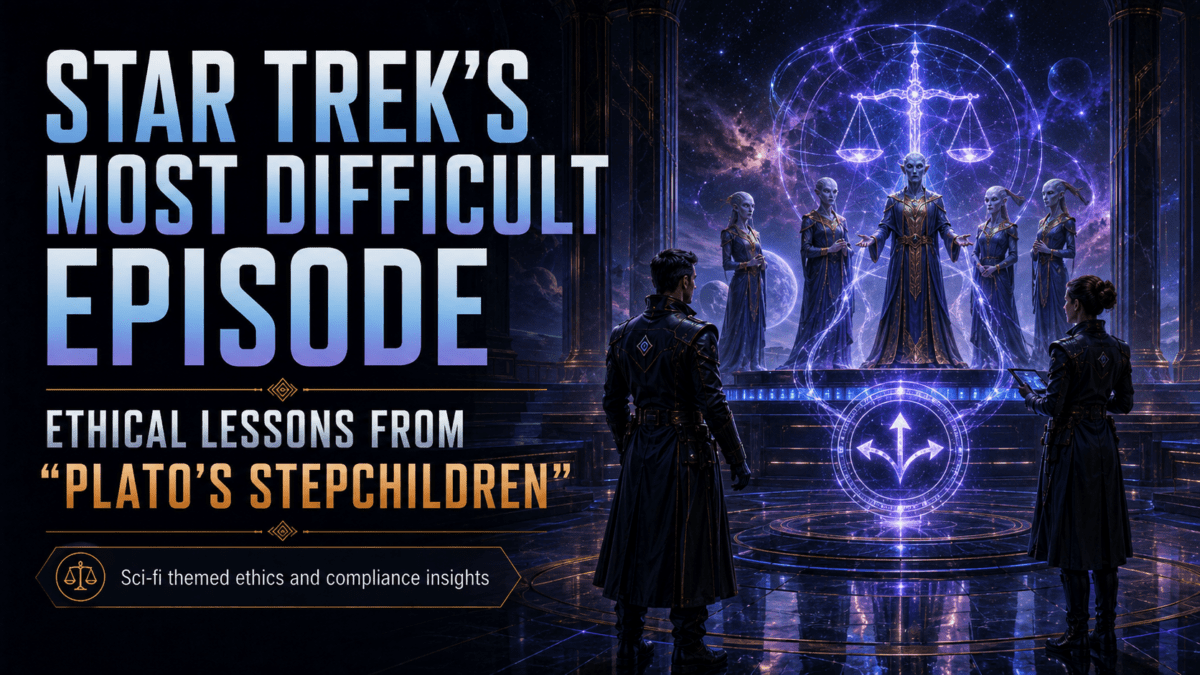
Star Trek’s Most Difficult Episode-Ethical Lessons from Plato’s Stepchildren

In this episode of Trekking Through Compliance, we consider the episode Plato’s Stepchildren, which aired on November 12, 1968, and occurred on Star Date 5784.0

Story Synopsis

The episode begins with the USS Enterprise responding to a distress call from a planet populated by the Platonians, a group of telepathic humanoids who model their society in ancient Greece. Upon arriving, Captain Kirk, Mr. Spock, and Dr. McCoy discover that the Platonians possess extraordinary telekinetic powers, which they use to manipulate and control others for amusement.

The Platonians’ leader, Parmen, demands that Dr. McCoy stay on the planet to serve them indefinitely, citing his medical skills as invaluable. When McCoy refuses, Parmen uses his powers to torture Kirk and Spock, forcing them to perform humiliating acts for entertainment. The Platonians’ cruelty is driven by their belief in their superiority and the assumption that their powers make them invincible.

As the episode progresses, the crew devises a plan to level the playing field. They discover that the Platonians’ powers are derived from kironide in the planet’s food. By synthesizing a serum, they temporarily gain similar telekinetic abilities. This allows them to challenge Parmen’s control, ultimately leading to the Platonians’ defeat.

A significant moment in the episode is the forced kiss between Captain Kirk and Lieutenant Uhura, one of the first interracial kisses on American television. While orchestrated under duress, this scene is iconic for its social and cultural impact.

Ultimately, the Enterprise crew warns the Platonians to change their ways, illustrating themes of resistance against tyranny, the ethical use of power, and the importance of equality and consent. Plato’s Stepchildren remains a thought-provoking episode that tackles complex social issues within a science fiction context.

Commentary

The plot revolves around the Enterprise crew encountering sadistic psychokinetic Plutonians who use their powers to amuse themselves at the expense of their captives. The episode is notorious for featuring the first interracial kiss on American television, though the context reveals a much darker scenario. Key compliance themes discussed include power dynamics, the importance of speaking up, respect for diversity, consent, crisis management, and accountability. Fox provides valuable insights into fostering a strong compliance culture while warning viewers about the episode’s disturbing content.

Resources

Excruciatingly Detailed Plot Summary by Eric W. Weisstein

MissionLogPodcast.com

Memory Alpha

Categories
Trekking Through Compliance

Trekking Through Compliance – Episode 65 – Ethical Lessons Learned Plato’s Stepchildren

In this episode of Trekking Through Compliance, we consider the episode Plato’s Stepchildren, which aired on November 12, 1968, and occurred on Star Date 5784.0

Story Synopsis

The episode begins with the USS Enterprise responding to a distress call from a planet populated by the Platonians, a group of telepathic humanoids who model their society in ancient Greece. Upon arriving, Captain Kirk, Mr. Spock, and Dr. McCoy discover that the Platonians possess extraordinary telekinetic powers, which they use to manipulate and control others for amusement.

The Platonians’ leader, Parmen, demands that Dr. McCoy stay on the planet to serve them indefinitely, citing his medical skills as invaluable. When McCoy refuses, Parmen uses his powers to torture Kirk and Spock, forcing them to perform humiliating acts for entertainment. The Platonians’ cruelty is driven by their belief in their superiority and the assumption that their powers make them invincible.

As the episode progresses, the crew devises a plan to level the playing field. They discover that the Platonians’ powers are derived from kironide in the planet’s food. By synthesizing a serum, they temporarily gain similar telekinetic abilities. This allows them to challenge Parmen’s control, ultimately leading to the Platonians’ defeat.

A significant moment in the episode is the forced kiss between Captain Kirk and Lieutenant Uhura, one of the first interracial kisses on American television. While orchestrated under duress, this scene is iconic for its social and cultural impact.

Ultimately, the Enterprise crew warns the Platonians to change their ways, illustrating themes of resistance against tyranny, the ethical use of power, and the importance of equality and consent. Plato’s Stepchildren remains a thought-provoking episode that tackles complex social issues within a science fiction context.

Commentary

The plot revolves around the Enterprise crew encountering sadistic psychokinetic Plutonians who use their powers to amuse themselves at the expense of their captives. The episode is notorious for featuring the first interracial kiss on American television, though the context reveals a much darker scenario. Key compliance themes discussed include power dynamics, the importance of speaking up, respect for diversity, consent, crisis management, and accountability. Fox provides valuable insights into fostering a strong compliance culture while warning viewers about the episode’s disturbing content.

Key Highlights

  • Story Synopsis
  • Disturbing Elements and Commentary
  • Compliance and Leadership Lessons

Resources

Excruciatingly Detailed Plot Summary by Eric W. Weisstein

MissionLogPodcast.com

Memory Alpha

Categories
AI Today in 5

AI Today in 5: August 4, 2026 the AI Replacing Nurses Edition

Welcome to AI Today in 5, the newest edition to the Compliance Podcast Network. Each day, I will bring to you 5 stories about AI stories to start your day. Sit back, enjoy a cup of morning coffee and listen in to the AI Today In 5. All, from the Compliance Podcast Network. Each day we consider four stories from the business world, compliance, ethics, risk management, leadership or general interest about AI.

  1. Who in your organization is authorized to shut down AI.(CCI)
  2. Keeping compliance AI at scale. (FinTechGlobal)
  3. The EU AI Act implications for US. (LinkedIn)
  4. When AI overwhelms the human in the loop. (BankingDive)
  5. Is AI replacing nurses in NYC? (Prism)

For more information on the use of AI in Compliance programs, my new book, Upping Your Game. You can purchase a copy of the book on Amazon.com. To learn about the intersection of Sherlock Holmes and the modern compliance professional, check out my latest book, The Game is Afoot-What Sherlock Holmes Teaches About Risk, Ethics and Investigations on Amazon.com

Categories
Everything Compliance - Shout Outs and Rants

Everything Compliance Shout Outs and Rants- Anime, Compliance Profession Generosity and eBay Lows/HBO Highs

Welcome to a revamped Everything Compliance Shout Outs and Rants. We have a new host, Adam Turteltaub, new panelist, Rebecca Walker who joins returning regulars Matt Kelly, Jonathan Armstrong and Karen Moore for the next iteration of Everything Compliance Shout Outs and Rants.

  • Adam rants about eBay and its $56MM settlement for illegal harassment.
  • Matt shouts out to the HBO show Life, Larry and the Pursuit of Unhappiness.
  • Rebecca shouts out to the generosity of the compliance profession.
  • Jonathan rants about tech bros and shouts out to circuses.
  • Karen shouts out Otakon and Japanese anime fans.

Everything Compliance Shout Outs and Rants is a production of the Compliance Podcast Network.

Categories
Daily Compliance News

Daily Compliance News: August 4, 2026 the A Piece of the Action Edition

Welcome to the Daily Compliance News. Each day, Tom Fox, the Voice of Compliance brings to you compliance related stories to start your day. Sit back, enjoy a cup of morning coffee and listen in to the Daily Compliance News. All, from the Compliance Podcast Network. Each day we consider four stories from the business world, compliance, ethics, risk management, leadership or general interest for the compliance professional.

  • US cricketer handed 8 year ban for corruption.  (Times of India)
  • Victims of LaFarge terrorist funding want piece of the settlement. (WSJ)
  • Ex-Goldman compliance manager fired for taking parental leave.(Bloomberg)
  • In praise of work deadlines. (FT)

To learn about the intersection of Sherlock Holmes and the modern compliance professional, check out my latest book, The Game is Afoot-What Sherlock Holmes Teaches About Risk, Ethics and Investigations on Amazon.com

Categories
Innovation in Compliance

Innovation in Compliance: From Checklists To Dynamic Compliance Systems with Justin Roopnarine

Innovation comes in many areas and compliance professionals need to not only be ready for it but embrace it. Join Tom Fox, the Voice of Compliance as he visits with top innovative minds, thinkers and creators in the award-winning Innovation in Compliance podcast. In this episode, host Tom Fox visits with Justin Roopnarine, Partner at Limitless Capital.

Roopnarine is an engineer whose career has spanned the Air Force, financial engineering, software engineering, and both public- and private-sector problem solving. He brings a practical perspective to evolving compliance and risk management, arguing that organizations need systems that can adapt to changing conditions rather than rely on static checklists or rigid SOPs. Roopnarine believes algorithmic auditing can make compliance more repeatable and effective by using rules, metrics, and programmatic checks to document decisions, monitor thresholds, and quickly identify where breakdowns occur. At the same time, he emphasizes that AI and technology should strengthen human judgment, and that financial literacy helps people comply more fully when they understand the reasons behind the rules and the broader goals they support.


Key Highlights

  • Living Compliance Framework for Changing Conditions
  • Algorithmic Compliance Checks with Portfolio Exposure Limits
  • FAR North Star of government contracting compliance
  • Consolidated Database Feedback Loop from Lower Ranks
  • Understanding the “why” behind financial rules

Resources

Managing Partner: Limitless Capital LP

Podcast: Approaching Infinity

Website: https://limitlesslp.com/

LinkedIn

https://www.linkedin.com/in/justin-roopnarine/

YouTube

https://www.youtube.com/@approachinginfinityshow

Spotify

https://open.spotify.com/show/32jOxQ8WhZElwk4c3RjkmD

Instagram

https://www.instagram.com/jrlive7/

TikTok

https://www.tiktok.com/@approaching_infinity_pod

Facebook

https://www.facebook.com/profile.php?id=61576572194605


Innovation in Compliance was recently honored as the Number 4 podcast in Risk Management by 1,000,000 Podcasts

Categories
Blog

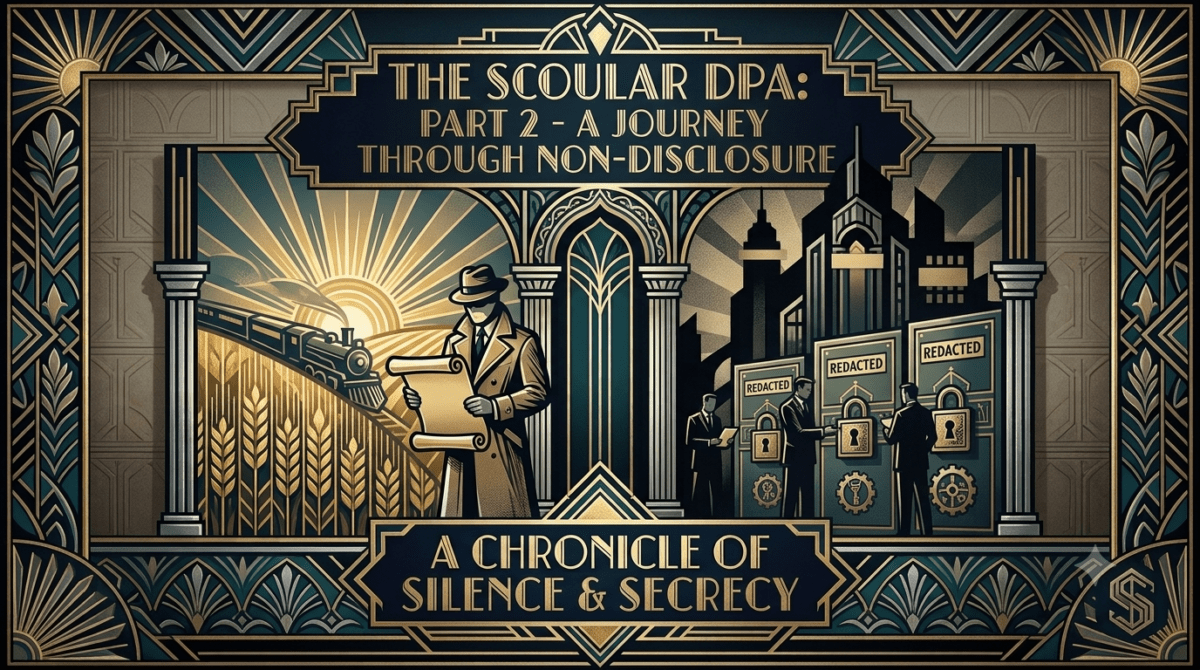
The Scoular DPA: Part 2 – A Journey Through Non-Disclosure

The Scoular Company Deferred Prosecution Agreement (DPA) presents a difficult but essential lesson for every Chief Compliance Officer and board: stopping misconduct is not the same as voluntarily disclosing it. This might seem as self-evident as anything in compliance but it a critical component of this case.

The Statement of Facts says that internal reports alleging improper business practices connected to the Mexican inspection fees arose in 2019. Scoular then changed its grain-shipment practices and terminated its direct engagement with the customs brokers involved. Those steps addressed the immediate conduct. They did not produce voluntary self-disclosure credit. That miss-step cost Scoular Company millions all the way to potentially a full Declination.

The DPA states that Scoular did not receive credit under the DOJ Corporate Enforcement and Voluntary Self-Disclosure Policy (VSP) because it did not “voluntarily and timely disclose” the conduct to the Fraud Section. That single sentence creates the central governance question in Blog Post Part 2: What must happen after a credible internal report reaches the company? An internal allegation starts an investigative clock. The company must preserve evidence, protect against retaliation, assess immediate risk, and establish enough facts to make responsible decisions. It also starts a disclosure clock.

The VSP encourages companies to report potential wrongdoing at the earliest possible time, even before an internal investigation is complete. To qualify as a voluntary self-disclosure, a report must be made in good faith to the appropriate DOJ component, concern misconduct not already known to the Department, occur without a preexisting disclosure obligation, precede an imminent threat of disclosure or government investigation, and be made within a reasonably prompt time after the company becomes aware of the misconduct.

The burden of demonstrating timeliness rests with the company. This does not mean a company must call the DOJ the moment an untested allegation enters the hotline. It does mean disclosure cannot wait until every interview, legal conclusion, and remediation project is complete. The investigation and disclosure analyses must proceed together.

The DPA Tells Us the Result, Not the Internal Debate

The agreement does not explain who received the 2019 reports, how the allegations were investigated, when senior management or the board learned of them, or why Scoular did not make a qualifying disclosure. It does not tell us whether the company made a deliberate decision not to report. What the DPA does establish is the outcome. Internal reports arose. The company changed its practices and terminated direct broker relationships. The company did not voluntarily and timely disclose the conduct to the Fraud Section and therefore received no voluntary disclosure credit.

That sequence is enough to demonstrate a control lesson. A company can remediate an operational problem and still leave the enforcement decision unresolved. The response requires four distinct workstreams:

  • Stopping the conduct prevents additional harm.
  • Investigating the conduct determines what happened and which controls failed.
  • Remediating the controls reduces recurrence risk.
  • Evaluating disclosure determines whether, when, where, and how the company should approach enforcement authorities. This fourth step is arguably the most important and one which must be reached with great speed; perhaps as little time as two weeks after initial determination.

A Disclosure Needs a Decision Process

Disclosure decisions should not depend on one executive’s instinct or on the hope that remediation will close the matter. The company needs a defined escalation structure involving legal, compliance, internal audit, finance, and appropriate senior management. Depending on the seriousness of the facts, the audit committee or another independent board committee may need to oversee the decision.

For an FCPA matter involving customs brokers, repeated payments, government officials, inaccurate invoice descriptions, senior personnel, and multiple years of conduct, the disclosure analysis should address:

  • What credible facts are known now?
  • Is the misconduct continuing?
  • Which individuals and third parties may be involved?
  • Are the books and records inaccurate?
  • Is there evidence of management participation, approval, condonation, or willful ignorance?
  • Has a whistleblower, auditor, regulator, bank, business partner, or foreign authority already received the same information?
  • Is there an imminent threat that the DOJ will learn of the conduct?
  • What additional facts are necessary to make a disclosure decision?
  • When will the decision be revisited?
  • Who has authority to decide, and how will the reasoning be documented?

The objective is not to create a paper defense for a predetermined result. It is to establish a disciplined process that forces the company to confront timing, uncertainty, accountability, and enforcement exposure.

Disclosure Does Not Require a Finished Investigation

One reason companies may delay is the understandable fear of reporting facts that are incomplete or later prove wrong. The DOJ policy addresses that concern directly. It encourages early disclosure even when the company has not completed its internal investigation. The company can report the misconduct known at that stage, identify the limits of its current knowledge, preserve credibility by avoiding unsupported conclusions, and provide rolling updates as the investigation develops.

That approach requires discipline. The initial disclosure should distinguish facts from allegations, describe preservation and remediation steps, and explain the investigative plan. Later presentations should attribute facts to specific sources and identify individuals regardless of seniority.

Waiting for certainty can eliminate the benefit the company hoped to secure. A whistleblower may contact the government, a third party may cooperate, or the payment may surface in another investigation. Once the DOJ already knows or disclosure is imminent, the analysis changes. The business lesson is straightforward. Uncertainty calls for a staged disclosure strategy, not an indefinite pause.

Cooperation Still Mattered

Scoular Company lost the disclosure benefit, but the DPA demonstrates that the company could still earn meaningful credit. The DOJ credited Scoular with conducting an internal investigation, making detailed factual presentations, identifying individuals involved, producing and organizing requested materials, securing counsel for current employees, and providing all relevant facts known to it.

Voluntary self-disclosure, cooperation, and remediation are separate pillars. A company that misses the first can still create value through the other two. The DPA also notes “certain deficiencies in the early part of the investigation.” It does not identify those deficiencies, and they should not be guessed. Their inclusion nevertheless sends a message: cooperation is judged across the life of the investigation, not merely by the quality of the final presentation.

The current DOJ policy makes the standard explicit. A company starts at zero cooperation credit and earns credit through specific actions. Scope, quality, impact, and timing matter. A failure to cooperate fully at the earliest opportunity may reduce the credit available later. For CCOs and boards, the lesson is that recovery remains possible, but delay has a price.

Remediation Changed How the Business Operated

Scoular also received credit for substantial remediation. The company increased compliance engagement with the business, used external compliance maturity and anti-corruption risk assessments, restructured the compliance function, and incorporated senior leadership oversight. It eliminated customs brokers associated with reinspection fees, strengthened risk-based review and monitoring with software tools, revised policies, enhanced third-party screening and approvals, added anti-corruption and audit-right provisions to contracts, improved financial controls for high-risk transactions, and delivered general and targeted training.

These measures went beyond terminating vendors. They addressed governance, third-party management, payment controls, monitoring, technology, policies, and training. That breadth matters because remediation must be tied to root cause. If the misconduct was enabled by commercial pressure, broker dependence, misleading invoices, weak transaction validation, and fragmented data, another annual training course will not solve the problem.

The Economic Difference Was Significant

Scoular entered into a three-year DPA and agreed to pay a $9,769,521 criminal penalty and $414,351 in forfeiture. The DPA states that the penalty reflected a 25 percent reduction from the applicable low-end amount. A footnote explains that the statutory alternative-fine cap, based on twice the approximately $6.513 million gross gain, constrained the otherwise higher Guidelines minimum.

The DPA does not say what disposition Scoular would have received after a qualifying disclosure. It would be improper to rewrite the resolution with hypothetical facts.

The current Department-wide CEP nevertheless shows why the distinction matters. A company that voluntarily self-discloses, fully cooperates, timely remediates, and has no disqualifying aggravating circumstances is placed on a declination path. A good-faith self-report that narrowly misses the policy’s technical requirements can still lead to an NPA, a term shorter than three years, no monitor, and a reduction of 50 to 75 percent from the low end. Companies outside those paths remain subject to prosecutorial discretion, with a reduction capped at 50 percent.

Scoular received a DPA, a three-year term, and a 25 percent reduction. The numbers turn disclosure governance into a business issue. The decision affects resolution form, penalty exposure, duration, oversight, reputation, management time, and the company’s ability to move beyond the misconduct.

Questions for CCOs

CCOs should ask:

  • Does every credible allegation involving government payments trigger a documented disclosure analysis?
  • Who owns the disclosure clock while the investigation proceeds?
  • Can legal and compliance make an early report without waiting for a completed investigation?
  • Are facts, assumptions, open questions, and decision deadlines documented separately?
  • Have we tested the process through a tabletop exercise involving a whistleblower, a third party, and an imminent government inquiry?

The Scoular DPA does not establish why the company missed voluntary disclosure credit. It does establish that internal reporting, operational remediation, and voluntary disclosure are not interchangeable. When a credible allegation arrives, the company must stop the conduct, investigate the facts, remediate the controls, and make a timely, documented disclosure decision. Doing three of those four things can still leave substantial value on the table.

Join us tomorrow for Part 3 where will examine how a robust internal control system paired with a robust data analytics overview can help a company from falling into a Scoular Company-type series of failures

Categories
TechLaw10

TechLaw10: The Perils of AI at University & Law School

In this episode of TechLaw10, Punter Southall Law’s Jonathan Armstrong and Eric Sinrod, Professor and Duane Morris LLP attorney, chat with special guest Jill Kawakami. This is episode 301 in the popular TechLaw10 series. You can listen to earlier podcasts here.

Jill, Jonathan & Eric discuss a number of issues, including:

  • how AI has changed legal training
  • the changes in education & how people learn
  • the use of AI in law school
  • whether ‘old school’ legal teaching still has a role to play
  • the rise of AI slop in subject access requests & complaints to regulators
  • the impact of AI on pro bono legal advice
  • AI awareness in judicial clerking positions

Jonathan talks about the Damien Charlotin database on hallucinations, which is here. There’s a summary of hallucination cases in the UK here. Jonathan also talks about the issues with AI-assisted search—there is more on that here. The NYSBA paper Jonathan talks about is here.

Jonathan talks about the EU AI Act. There are FAQs on that here: https://bit.ly/euaifaq. There is also a glossary of AI terms here.

Eric Sinrod’s details can be found here, and Jonathan Armstrong’s details are available here.