Categories
Innovation in Compliance Uncategorized

The Salus Blueprint: Episode 3 What Do We Actually Know

What questions might a leader might face on a difficult morning? In this special podcast series, Marc Duncan, Bridgett Lee-Young and Scott Pickett of Salus Solutions, explain one useful idea for a variety of corporate professionals such as corporate risk and compliance leaders, anti-bribery and corruption professionals, and then demonstrate how that idea changes a decision. This podcast is also for police and fire chiefs, emergency managers, finance and operations executives, CEOs, boards, and leaders of commercial, public, and private organizations. Over the next 4 weeks, we will be running this special series.

In this Episode 3, we move from reports to decision-grade intelligence. We continue the River Bend scenario to explain how raw reports become actionable intelligence for leaders. The panelists distinguish information from intelligence by emphasizing verification, context, confidence levels, and the need to answer “so what,” including triaging fast-moving inputs during response versus slower mitigation phases. We consider “trust but verify,” using multiple sources and alternatives such as forensic data, open-source information, satellite imagery, and patterns of life when human intelligence is unavailable, while clearly stating what is known, believed, unknown, and what would change the assessment. They stress building trusted relationships before crises, integrating functional areas like legal and accounting into decisions, and recognizing differing board risk tolerances through facilitation and reflective questioning. They also address maintaining credibility when assessments change by issuing complete corrections to all prior recipients.

Key Highlights

  1. “What changes when a raw report becomes intelligence a decision-maker can responsibly use?”
  2. “If three people repeat the same unverified story, have we gained three independent sources?”
  3. “How do you assess whether a system interruption is recent, confirmed, relevant to Riverbend, and likely to affect an essential service?”
  4. “How do you handle a potential vendor integrity concern without accusing anyone prematurely or compromising a legitimate review?”
  5. “What should an intelligence briefing say about confidence, limitations, and missing information?”
  6. “When would you call in a technical specialist, an investigator, or a local public-safety partner rather than generalize beyond your expertise?”
  7. “What does SalINTEL provide that a search engine, an alert feed, or a dashboard cannot determine on its own?”
  8. “What new fact would make you change your mind, and how should that update reach the people who acted on the earlier assessment?”

Questions for Our Listeners: Even if the warning is credible, can you show which consequence matters most and whether your people can handle it? Next time we turn understanding into risk and capability priorities.

About Salus Solutions: “Salus helps organizations understand what matters, make informed protective decisions, and carry them into action. SalCAPA is the method and coordination environment that connects those steps.”

Salus Solutions is the sponsor of this podcast series.

Categories
Compliance Into the Weeds

Compliance into the Weeds: Extreme Networks: The “Imminent Threat” Limit on Voluntary Self-Disclosure Credit

The award winning, Compliance into the Weeds is the only weekly podcast which takes a deep dive into a compliance related topic, literally going into the weeds to more fully explore a subject. Looking for some hard-hitting insights on compliance? Look no further than Compliance into the Weeds! In this episode of Compliance into the Weeds, Tom Fox and Matt Kelly discuss the DOJ and OFAC actions involving Extreme Networks.

The company’s Russia office sold advanced networking equipment to Avangard, a Russian state-owned defense firm on U.S. sanctions lists via majority ownership by Almaz-Antey. After a whistleblower report in April 2022, Extreme investigated and briefed its board by June but did not disclose until investigative reporters contacted the company in October with additional facts, prompting a renewed inquiry and self-disclosure by year-end. DOJ deemed the disclosure driven by “imminent threat,” denying voluntary self-disclosure credit and issuing a non-prosecution agreement rather than a declination, with $2.5 million in combined penalties. The episode examines uncertainty about what changed, how DOJ benefits from quality disclosures, and OFAC’s emphasis on timely, effective screening and heightened diligence in high-risk jurisdictions like Russia.

Key Highlights

  • The enforcement actions
  • Imminent Threat Debate
  • OFAC Red Flags
  • Screening Lessons
  • Self Disclosure Policy


Resources

Matt in Radical Compliance


Tom

Instagram

Facebook

YouTube

Twitter

LinkedIn

A multi-award winning podcast, Compliance into the Weeds was most recently honored as one of a Top 25 Regulatory Compliance Podcast and a Top 10 Business Law Podcast, and a Top 12 Risk Management Podcast. Compliance into the Weeds has been conferred a Davey, Communicator and w3 Award, all for podcast excellence.

Categories
ACI FCPA Conference 2025

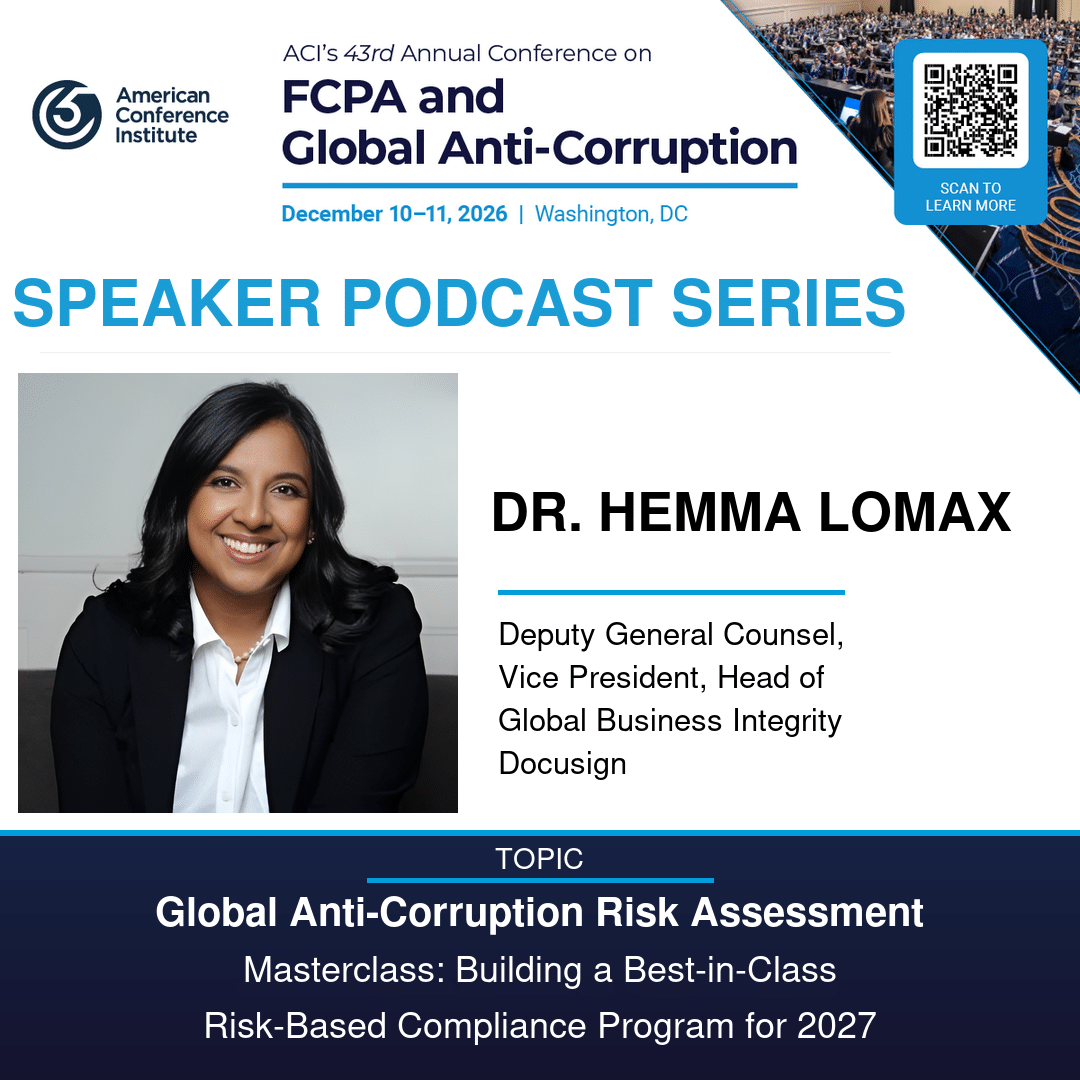
ACI FCPA and Global Anti-Corruption Conference 2026 Speaker Preview Podcast Series, Hemma Lomax

In this episode of the FCPA and Global Anti-Corruption Conference 2026 Speaker Preview Podcast series, Dr. Hemma Lomax discusses her panel, “Global Anti-Corruption Risk Assessment Masterclass: Building a Best-in-Class Risk-Based Compliance Program for 2027 and Creating a Single View of Compliance Risk: Leveraging AI to Connect Disparate Data Sources, Identify Emerging Risks, and Strengthen Compliance Oversight” Some of the issues she discusses in this podcast and her panel presentation are:

  • Building a best in class compliance program in 2027
  • Keeping abreast of and using cutting edge tech for your compliance program.
  • Incorporating emerging risks and Administration priorities into your program.

As global enforcement priorities shift and anti-corruption risks grow more complex, staying ahead requires direct insight from those shaping, interpreting, and navigating the regulatory landscape.

Returning to Washington, DC, this December 10-11, ACI’s flagship FCPA and Global Anti-Corruption Conference brings together an unparalleled gathering of government enforcement officials, in-house compliance leaders, and top legal practitioners from around the world. Gain firsthand insights, benchmark strategies with industry peers, and walk away with practical approaches to strengthen compliance programs, manage emerging risks, and prepare for what’s next. Few events offer this depth of expertise, access, and opportunity to connect with the global anti-corruption community.

I hope you can join us. For event details, click ⁠here⁠. As an extra benefit to podcast listeners, ACI is offering a 10% discount on the ⁠registration⁠ price. Use discount code D10-999-CPN27 to apply your discount.

The Compliance Podcast Network produces the ACI FCPA and Global Anti-Corruption Conference 2026 Speaker Preview Podcast series. ACI sponsors this series.

Categories
FCPA Compliance Report

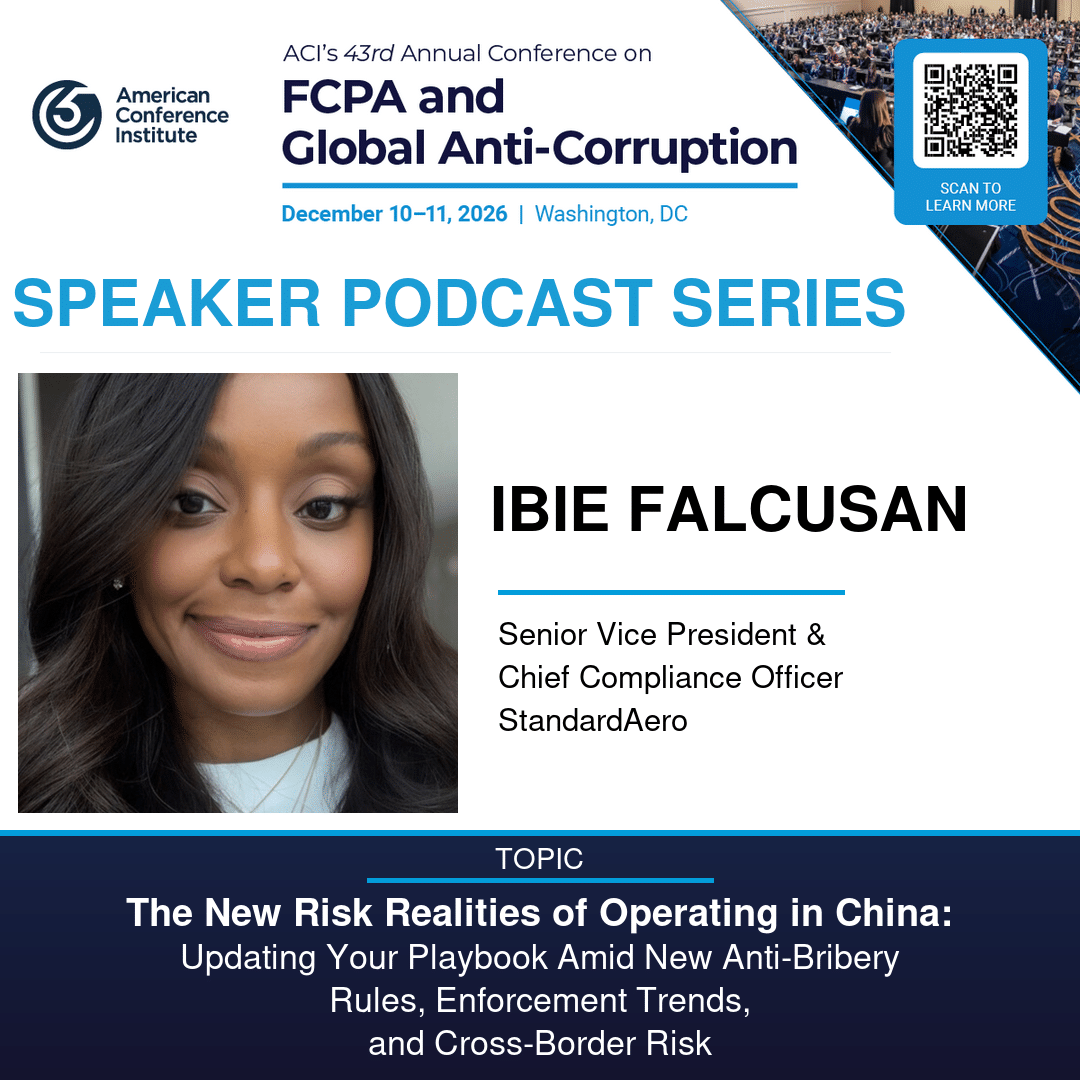
ACI FCPA and Global Anti-Corruption Conference 2026 Speaker Preview Podcast Series, Ibie Falcusan

In this episode of the FCPA and Global Anti-Corruption Conference 2026 Speaker Preview Podcast series, Anik Shah discusses his panel, “The New Risk-Realities of Operating in China: Updating Your Playbook Amid New Anti-Bribery Rules, Enforcement Trends, and Cross-Border Risk” Some of the issues she discusses in this podcast and her panel presentation are:

  • What’s going on in and with China around ABC?
  • Hidden corruption with intermediaries, brokers and 3rd parties.
  • Emerging risks such as volume based contracting.

As global enforcement priorities shift and anti-corruption risks grow more complex, staying ahead requires direct insight from those shaping, interpreting, and navigating the regulatory landscape.

Returning to Washington, DC, this December 10-11, ACI’s flagship FCPA and Global Anti-Corruption Conference brings together an unparalleled gathering of government enforcement officials, in-house compliance leaders, and top legal practitioners from around the world. Gain firsthand insights, benchmark strategies with industry peers, and walk away with practical approaches to strengthen compliance programs, manage emerging risks, and prepare for what’s next. Few events offer this depth of expertise, access, and opportunity to connect with the global anti-corruption community.

I hope you can join us. For event details, click ⁠here⁠. As an extra benefit to podcast listeners, ACI is offering a 10% discount on the ⁠registration⁠ price. Use discount code D10-999-CPN27 to apply your discount.

The Compliance Podcast Network produces the ACI FCPA and Global Anti-Corruption Conference 2026 Speaker Preview Podcast series. ACI sponsors this series.

Categories
Daily Compliance News

Daily Compliance News: November 4, 2026 the Election Edition

Welcome to the Daily Compliance News. Each day, Tom Fox, the Voice of Compliance brings to you compliance related stories to start your day. Sit back, enjoy a cup of morning coffee and listen in to the Daily Compliance News. All, from the Compliance Podcast Network. Each day we consider four stories from the business world, compliance, ethics, risk management, leadership or general interest for the compliance professional.

  • Injustice from the Libor Affair. (FT)
  • Former Cleveland pitchers facing trial over rigged bets. (Bloomberg)
  • London court rejects -ex-Nigerian governor’s appeal.   (Reuters)
  • Insurer’s lose cost proceedings but still don’t pay bills. (NYT)

My first work of general non-fiction is now out: Deluge Before Dawn, the story of the 2025 flood in Kerr County Texas which killed 119 people and devastated a county. It is a story of tragedy, heartbreak, survival and resilience. It is available on the following sites:

 Amazon.com

Stoney Creek Publishing

Barnes and Noble

Texas A&M University Press

Bookshop.org

Google.Books

Walmart

Categories
Daily Compliance News

AI Today in 5: November 4, 2026 the Control and Sovereignty Edition

Welcome to AI Today in 5, the newest edition to the Compliance Podcast Network. Each day, I will bring to you 5 stories about AI stories to start your day. Sit back, enjoy a cup of morning coffee and listen in to the AI Today In 5. All, from the Compliance Podcast Network. Each day we consider four stories from the business world, compliance, ethics, risk management, leadership or general interest about AI.

  1. Compliance and insider trading on prediction markets.(FinTechGlobal)
  2. US gov dereg making AI compliance harder.(Forbes)
  3. AI vendors join in liability for clinical AI mistakes.(HealthcareDive)
  4. Can chatbots infringe copywrite law? (WSJ)
  5. The UK approach to AI framework.(FT)

My first work of general non-fiction is now out: Deluge Before Dawn, the story of the 2025 flood in Kerr County Texas which killed 119 people and devastated a county. It is a story of tragedy, heartbreak, survival and resilience. It is available on the following sites:

 Amazon.com

Stoney Creek Publishing

Barnes and Noble

Texas A&M University Press

Bookshop.org

Google.Books

Walmart

Categories
Great Women in Compliance

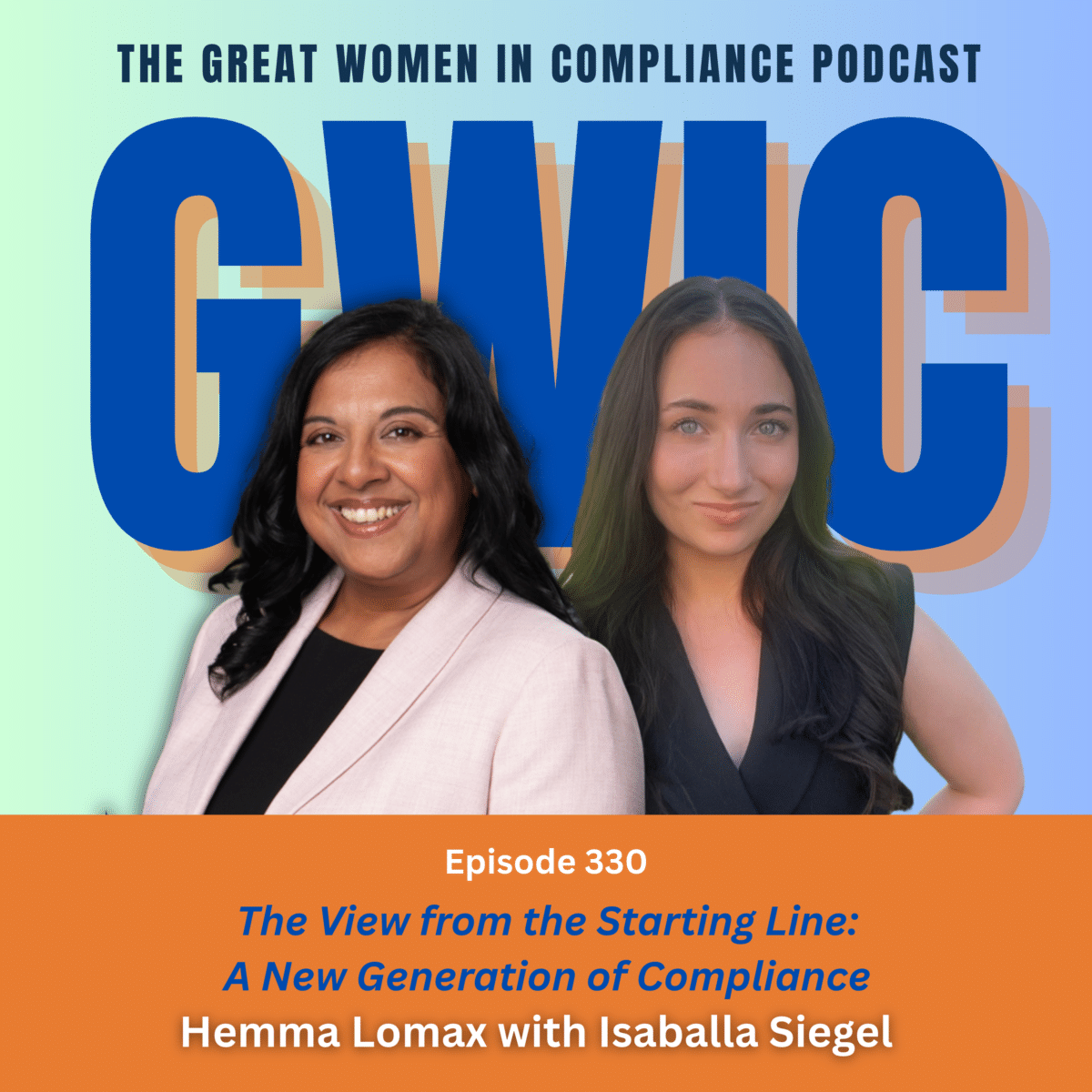
Great Women in Compliance: The View from the Starting Line: A New Generation of Compliance

What does the future of compliance look like through the eyes of someone preparing to enter the profession?

This week on Great Women in Compliance, Dr. Hemma R. Lomax welcomes Isabella (Izzy) Siegel, a Northeastern University student whose experiences have already taken her from local courtrooms to the U.S. Attorney’s Office, corporate compliance at TJX, and the United Nations in Geneva.

Izzy shares a fascinating perspective on going to college in the age of AI, watching universities evolve from prohibiting generative AI to teaching students how to use it responsibly. She also reflects on helping develop Copilot training for senior executives, rediscovering the value of foundational legal skills, and seeing firsthand how compliance shapes organizational culture.

One particularly powerful insight emerges from her work with compliance training data covering hundreds of thousands of employees: behind every number is a real person whose experience matters.

The conversation explores curiosity, practical learning, responsible innovation, and Izzy’s ambitions to turn policy and research into tangible impact. She also offers a thoughtful challenge to compliance leaders: embrace different backgrounds and perspectives when building the next generation of the profession.

A refreshing conversation about learning across generations, the evolving relationship between humans and AI, and why the future of compliance is in good hands.

Biography: 

Isabella (Izzy) Siegel is a student at Northeastern University and will graduate in December 2026 with a degree in Political Science and Business Administration. Her experience spans corporate compliance at TJX Companies, legal work with the U.S. Attorney’s Office for the Southern District of New York, and international research in Geneva. Passionate about international law, public policy, and the ethical implications of AI, Izzy is particularly interested in translating research and policy into meaningful, real-world impact. She hopes to build a career at the intersection of law, business, and global affairs.

Categories
Blog

Anthropic’s IPO: 5 Lessons for Corporate Compliance Professionals

The most important question arising from Anthropic’s IPO disclosures is what compliance professionals should do with the risks they reveal. Identifying exposure begins the analysis. Building a program that can manage that exposure is the business challenge.

In Parts I and II, I examined ten corporate compliance risks, ranging from AI safety and regulatory enforcement to third-party dependencies, financial reporting, and board oversight. In this blog post, I want to turn those risks into five practical lessons for CCOs, general counsel, directors, and business leaders can use today for the compliance management of AI.

Those lessons extend beyond AI developers. A manufacturer using AI in procurement, a financial services company deploying customer-facing tools, or a professional services firm connecting AI to confidential records must understand how those uses affect its control environment. Purchasing the technology does not eliminate the need to govern its use.

The central issue is accountability. Who owns the risk? Which controls address it? How does management know those controls work? What happens when they fail? These are familiar compliance questions. AI makes the answers more urgent.

  1. AI governance must become part of enterprise compliance

A standalone AI ethics policy cannot carry the weight of an enterprise compliance program. Principles require operational decisions: what uses are permitted, what information systems may access, what actions require approval, and who can suspend deployment. Start with an inventory of AI uses across the business. Include purchased applications, internally developed systems, employee experimentation, and AI features embedded in existing software. For each use, identify the business owner, data involved, decisions supported, and authority granted. A drafting assistant and an agent authorized to initiate payments require different controls.

Then connect the inventory to the enterprise risk assessment. Classify uses according to potential harm, legal exposure, sensitivity of information, and difficulty of reversing an action. Assign control owners and specify when reassessment is required. A new data connection or expanded permission can change the risk without changing the product name. Governance also requires decision rights. Compliance, legal, security, technology, and business teams should understand their respective responsibilities. Disagreements about deployment need a documented escalation route, including authority to delay implementation when critical safeguards remain unresolved.

Frameworks such as the NIST AI Risk Management Framework and ISO/IEC 42001 can help organize this work. Their practical value depends on whether the company translates its chosen approach into operating responsibilities and verifiable controls.

The CCO question: Can we identify the accountable owner and supporting controls for every material AI use?

  1. Traditional compliance risks remain fundamental

AI changes how misconduct can occur and how quickly its effects can spread. Established compliance disciplines still provide the starting point for identifying the exposure. Consider a hypothetical procurement agent that recommends vendors and prepares payment instructions. Its technical performance may appear strong while its workflow bypasses conflict disclosures, restricted-party screening, or approval requirements. Faster processing can amplify a weak control environment.

The appropriate response is to examine the underlying business process. Map where an AI system receives information, makes recommendations, changes records, or initiates actions. Identify the approvals, segregation of duties, documentation, and monitoring that must remain effective at each stage. Determine whether automation has created a new route around an existing safeguard. Anti-corruption controls illustrate the point. An intermediary recommended by an AI tool still requires appropriate diligence. A payment description generated by a model still requires verification. A confident recommendation cannot substitute for evidence about ownership, services performed, compensation, or government connections.

Training should reflect these practical choices. Employees need examples showing when to question an output, obtain approval, preserve records, or report a concern. Generic instructions to use AI responsibly provide little help when a system recommends a questionable transaction under commercial pressure. The CCO should also examine incentives. Employees measured solely on speed or volume may have little reason to challenge an automated recommendation. Managers must support escalation when verification delays a transaction.

The CCO question: Where could AI bypass, weaken, or obscure a control we already depend upon?

  1. Third-party risk management must include technology dependencies

Traditional third-party programs often focus on agents, distributors, consultants, and other commercial intermediaries. AI requires equally careful attention to model providers, cloud infrastructure, data suppliers, integration partners, and subcontractors supporting critical services. The first task is dependency mapping. Determine which providers support essential workflows, what information they receive, and whether multiple applications depend on the same underlying service. Several vendor contracts may conceal a single point of operational failure.

Due diligence should follow the actual use. A tool processing public information presents different concerns from a service accessing customer records or executing transactions. Ask how information is retained, whether it may be used for training, how access is controlled, and what changes the provider can make without customer approval. Contracts should support the controls the company needs. Depending on risk, that may include incident notification, restrictions on data use, information about subcontractors, access to assurance evidence, and notice of material service changes. Legal and procurement teams should identify gaps before the business becomes dependent on the service.

Monitoring must continue after onboarding. A provider update can affect performance, permissions, or data handling. Assign responsibility for reviewing material changes and deciding when testing must be repeated. Finally, test the exit plan. Can the business recover its information, revoke access, and maintain essential operations if the relationship ends? A contractual termination right offers limited protection when no workable alternative exists.

The CCO question: Which technology dependencies could prevent us from meeting critical obligations, and what is our tested response?

  1. Compliance must be embedded in product development

Compliance review is most useful while business and technical choices can still be changed. Waiting until launch makes it harder to address weaknesses in data access, system permissions, customer communications, or monitoring. The Evaluation of Corporate Compliance Programs (ECCP) expressly addresses how companies assess and manage risks associated with AI and other emerging technologies. That provides an enforcement-informed reason to integrate AI risk into the broader compliance program.

For the CCO, the practical response is a development process with review points proportionate to risk. Assess the intended use before development, review controls during testing, document approval before deployment, and monitor behavior afterward. Material changes should trigger renewed review. Testing should examine foreseeable misuse and control failure alongside normal performance. Can a user induce unauthorized disclosure? Can an agent exceed its permissions? Does the system preserve records needed to investigate an incident? Can a human reviewer meaningfully intervene?

A nominal human approval step deserves particular scrutiny. If reviewers lack time, information, or authority to challenge recommendations, the safeguard may offer little protection. Test how people actually perform the review under realistic workloads. Compliance also needs access to relevant information and sufficient technical support to assess the results. Establish channels for employees to report unexpected behavior without having to prove a technical defect first. Investigations should connect incidents to root causes and corrective action.

The CCO question: At what development decisions can compliance require changes, and what evidence supports approval?

  1. Boards must demand evidence of effectiveness

Board oversight depends on information that enables challenge. Counts of policies issued, training completed, and committee meetings held describe activity. Directors also need evidence about whether material risks are being controlled. Management reporting should identify significant AI uses, unresolved control weaknesses, incidents, overdue remediation, and decisions to accept residual risk. Explain what changed since the previous report and whether the change affects the company’s ability to operate within approved limits.

Metrics need context. An increase in reported incidents may reflect improved detection rather than worsening performance. A low incident count may conceal weak monitoring. Directors should ask how management interprets the numbers and what independent testing supports that interpretation. Reports should also surface disagreements and exceptions. If management approved deployment despite an unresolved compliance concern, the board needs to understand the decision, compensating controls, accountable executive, and deadline for reconsideration. Commercial significance should increase the quality of scrutiny.

Directors do not need to reproduce technical testing. They need reliable reporting, access to appropriate expertise, and a clear process for following material concerns through remediation. Meeting records should capture substantive questions, commitments, and follow-up. The board question: What evidence would cause management to restrict or suspend an AI deployment, and has that response been tested? The larger lesson: turn commitments into operating discipline

Anthropic’s disclosures bring emerging technology risk, traditional compliance obligations, and governance expectations into one discussion. The practical response is an integrated program that connects business decisions to accountable owners, tested controls, and timely escalation.

Begin with three actions: identify the most consequential AI uses, test whether existing controls cover them, and present unresolved gaps to the appropriate decision makers. Assign deadlines and verify remediation. Give business owners clear responsibility for explaining remaining gaps and reporting progress until corrective work is complete.

For CCOs and boards, the measure of progress is whether the organization can demonstrate that its controls work as capabilities, permissions, and business uses change. That is how AI governance becomes an effective business discipline. The following is my qualitative assessment, not a quantitative risk score disclosed by Anthropic. The rankings reflect the combined importance of regulatory exposure, potential harm, and control complexity.

Rank Corporate compliance risk Priority Primary accountability
1 AI safety and autonomy Critical Chief AI/Safety Officer, CCO
2 Regulatory enforcement Critical General Counsel, CCO
3 Privacy and cybersecurity Critical CISO, Privacy Officer
4 Intellectual property Critical General Counsel
5 Export controls and sanctions Critical Trade Compliance, CCO
6 Third-party risk High Procurement, CCO
7 Anti-bribery and corruption High CCO
8 Financial reporting and disclosure High CFO, Audit Committee
9 Corporate governance High Board, General Counsel
10 Consumer protection High Legal, Product Compliance