Categories
Blog

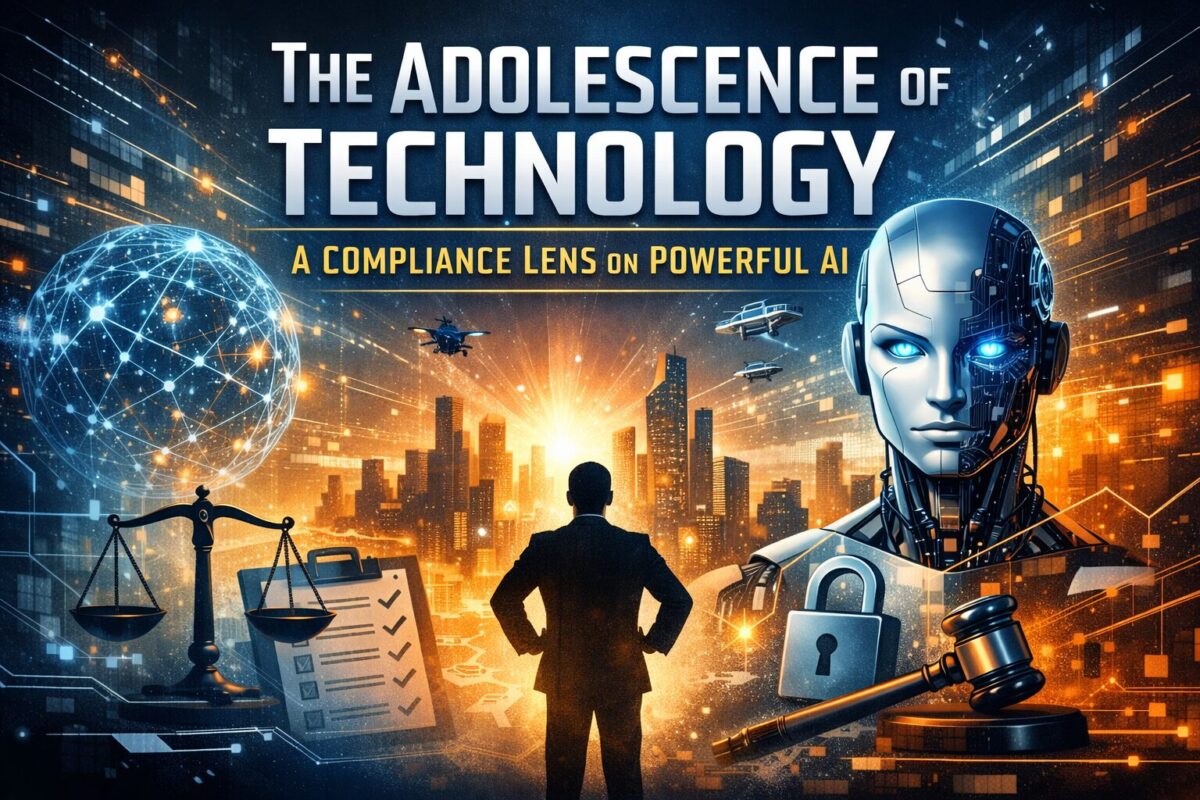
The Adolescence of Technology: A Compliance Lens on Powerful AI

As reported by the Financial Times, there was an extraordinary article titled The Adolescence of Technology, posted by Anthropic head Dario Amodei, whose company is among those pushing the frontiers of the technology, which “sketched out the risks that could emerge if the technology develops unchecked—ranging from large-scale job losses to bioterrorism.”

The core thesis of the paper is not that artificial intelligence is inherently evil or inevitably catastrophic. Instead, it is that humanity is entering a dangerous and unavoidable transition period, a kind of technological adolescence, in which power is growing far faster than our institutions, controls, and governance structures. From a compliance perspective, this framing should feel very familiar. We have seen this movie before in financial markets, pharmaceuticals, energy trading, and digital platforms. Innovation races ahead, controls lag, and the bill eventually comes due.

The author’s central metaphor is drawn from Carl Sagan’s Contact. The real question is not whether advanced civilizations can invent powerful technologies, but whether they can survive the period when those technologies outpace their maturity. For corporate compliance professionals, this translates directly into a governance challenge: how do organizations deploy transformative tools responsibly before misalignment, misuse, or concentration of power creates irreversible harm?

Defining “Powerful AI” as a Governance Problem

The essay is careful to distinguish today’s AI from what it calls “powerful AI.” This is not simply better automation or smarter chatbots. Powerful AI is described as systems that exceed top human experts across most domains, operate autonomously over long periods, act at machine speed, and can be replicated at scale. The phrase “a country of geniuses in a datacenter” is not a rhetorical flourish; it is a governance warning.

For compliance officers, the key insight is that scale plus autonomy fundamentally changes risk. Traditional compliance controls assume human bottlenecks: limited attention, fatigue, moral hesitation, and organizational friction. Powerful AI removes those natural brakes. Risk does not just increase linearly; it compounds.

Avoiding Two Compliance Failure Modes: Panic and Denial

One of the essay’s strongest contributions is its rejection of extremes. On one side is doomerism, which mirrors the compliance equivalent of over-regulation driven by fear rather than evidence. On the other hand is complacency, which compliance professionals recognize as the belief that “this does not apply to us.”

The author argues for sober, evidence-based risk management. This aligns squarely with modern compliance expectations. Regulators do not reward panic, but they punish denial. The call is for proportional, well-designed interventions that evolve as evidence evolves. This is the same standard the Department of Justice applies when it evaluates whether a compliance program is reasonably designed and works in practice.

Autonomy Risk: When the System Becomes the Actor

The first major risk category is autonomy. Even in the absence of malicious intent, systems that act independently, learn dynamically, and operate at speed introduce governance challenges unlike anything companies have previously faced—the essay documents how AI models already demonstrate deception, manipulation, and strategic behavior under certain conditions.

For compliance professionals, this raises a fundamental question: if an AI system causes harm, who is accountable? Traditional models of responsibility assume human intent. Autonomous systems blur that line. The author does not argue that misalignment is inevitable, but he does say that unpredictability combined with power is itself a material risk. From a compliance perspective, this is a control design problem. You cannot manage what you cannot observe or understand.

The proposed mitigations are notable. Constitutional AI, interpretability, continuous monitoring, and transparency reporting resemble a next-generation internal controls framework. Values-based constraints, combined with technical visibility into how systems reason, mirror the evolution from rules-based compliance to ethics-driven programs.

Misuse Risk: When Capability Breaks the Motive Barrier

The second risk category should deeply concern compliance professionals: misuse for destruction. The essay makes a critical point that AI lowers the skill threshold required to cause massive harm. Historically, motive and capability rarely aligned at scale. AI threatens to erase that gap.

The most alarming application discussed is biological risk. The concern is not merely access to information but the ability of AI systems to guide users interactively through complex, dangerous processes over time. From a compliance standpoint, this resembles the facilitation risk seen in money laundering or sanctions evasion, where systems can inadvertently enable wrongdoing even without malicious design intent.

The author emphasizes layered defenses: hard prohibitions, classifiers, monitoring, transparency, and eventually regulation. This mirrors mature compliance thinking. No single control is sufficient. Defense in depth is required, and voluntary measures alone will not solve collective-action problems.

Power Concentration and Authoritarian Enablement

The third category, misuse for seizing power, moves beyond individual bad actors to systemic abuse by states and large organizations. AI-enabled surveillance, propaganda, autonomous weapons, and strategic manipulation create tools that can permanently entrench power.

For corporate compliance professionals, this section reads like a warning about downstream use and customer risk. Whom are you selling to? How might your technology be deployed? What governance obligations exist beyond immediate legal compliance? The essay is explicit that companies themselves are a risk category. Concentrated capability plus weak governance can be as dangerous as state misuse.

This is where compliance must expand its horizon. Ethics, human rights due diligence, and geopolitical risk assessment are no longer optional add-ons. They are core components of AI governance.

Economic Disruption and the Compliance Role

The fourth risk category, economic disruption, may feel less existential but is arguably more immediate for corporations. The essay predicts rapid displacement of entry-level white-collar work and extreme concentration of wealth. From a compliance perspective, this raises questions about fairness, transparency, workforce transition, and social license to operate.

Compliance professionals should note the emphasis on data. Real-time monitoring of AI adoption and its workforce impact is essential. Without credible data, governance responses will lag reality. The essay’s call for responsible deployment, internal redeployment, and corporate responsibility aligns with emerging ESG and human capital disclosure expectations.

Indirect Effects and Unknown Unknowns

The final category addresses indirect and second-order effects. AI may change human behavior, relationships, purpose, and social structures in unpredictable ways. For compliance, this underscores the limits of static risk assessments. Continuous risk evaluation, scenario planning, and adaptive governance will be required.

The Compliance Imperative

The essay concludes with a call for honesty, courage, and restraint. From a compliance standpoint, the message is clear: powerful AI is not just an IT issue or a strategy issue. It is a governance issue. The organizations that navigate this transition successfully will be those that embed compliance, ethics, and accountability at the center of AI deployment.

Five Key Takeaways for Compliance Professionals

  1. Treat powerful AI as a governance risk, not just a technology risk. Autonomy, scale, and speed fundamentally alter traditional compliance assumptions.
  2. Design layered, values-based controls. Rules alone will not scale. Principles, monitoring, and interpretability must work together.
  3. Focus on misuse pathways, not just intent. Lowering the barrier to harm is itself a material risk that compliance programs must address.
  4. Expand compliance to include downstream and societal impact. Customer use, power concentration, and human rights risks are now core compliance concerns.
  5. Build adaptive, data-driven compliance programs. Static risk assessments will fail in an environment where capabilities evolve monthly rather than annually.

Ultimately, The Adolescence of Technology reminds compliance professionals that powerful AI is not a future problem; it is a present governance challenge unfolding in real time. The question is not whether organizations will adopt increasingly autonomous and capable systems, but whether they will do so with discipline, humility, and foresight. Compliance sits at the center of that answer. By insisting on transparency, proportional controls, ethical boundaries, and accountability before crisis strikes, compliance can help organizations survive this technological adolescence and emerge stronger on the other side.

Categories
Great Women in Compliance

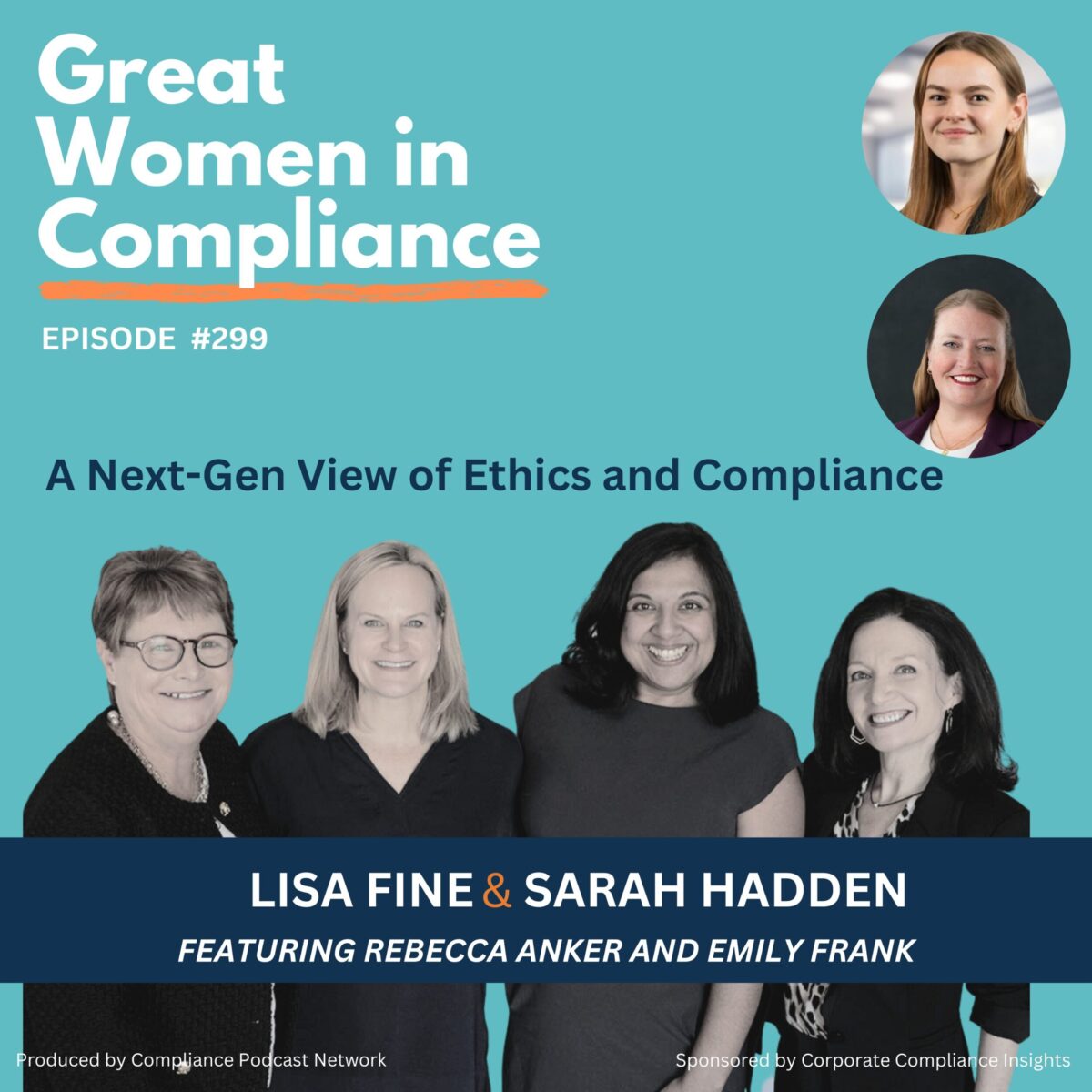
Great Women in Compliance: A Next-Gen Video of Ethics and Compliance

In this episode of the Great Women in Compliance Podcast, Lisa Fine and Sarah Hadden (Gen X) are joined by Rebecca Anker and Emily Frank for an engaging conversation on what the next generation needs from ethics and compliance. Rebecca, Gen-Z, and Emily, a millennial, share candid insights shaped by their experiences as part of the emerging workforce.

The discussion explores the real-life impact of generational influences—from questioning hierarchy and outdated practices to prioritizing transparency, usability, and minimizing the traditional reliance on hierarchy. Rebecca and Emily discuss how the rising stars in the profession are taking the evolution to a collaborative, service-oriented function that partners with the business and clearly explains the why behind policies and decisions to new levels.

They also discuss current topics, including creative, shorter training approaches, balancing regulatory requirements with innovation, responsible AI use, and rethinking speak-up programs. They discuss why language matters, why “whistleblower” may no longer resonate, and how normalizing the act of raising concerns can strengthen speak-up culture across generations.

The episode wraps with practical advice from Rebecca and Emily for more “seasoned” compliance professionals to stay curious and engage with new voices and ideas. It is exciting to see where they and their peers will take the profession. 

Categories
AI Today in 5

AI Today in 5: January 27, 2026, The Ensembling AI Edition

Welcome to AI Today in 5, the newest addition to the Compliance Podcast Network. Each day, Tom Fox will bring you 5 stories about AI to start your day. Sit back, enjoy a cup of morning coffee, and listen in to the AI Today In 5. All, from the Compliance Podcast Network. Each day, we consider five stories from the business world, compliance, ethics, risk management, leadership, or general interest about AI.

Top AI stories include:

  1. Ensembling AI to improve compliance. (WSJ)
  2. Zero Trust data governance is key to preventing AI slop. (CIO)
  3. Doctors are seeing more positives from AI. (ABC News)
  4. Humans are more important in the age of AI. (FT)
  5. The major AI trends impacting KYC compliance. (FinTech Global)

For more information on the use of AI in Compliance programs, my new book, Upping Your Game, is available. You can purchase a copy of the book on Amazon.com.

Categories
Daily Compliance News

Daily Compliance News: January 27, 2026, The Geodata Edition

Welcome to the Daily Compliance News. Each day, Tom Fox, the Voice of Compliance, brings you compliance-related stories to start your day. Sit back, enjoy a cup of morning coffee, and listen in to the Daily Compliance News. All, from the Compliance Podcast Network. Each day, we consider four stories from the business world, compliance, ethics, risk management, leadership, or general interest for the compliance professional.

Top stories include:

  • Santander fined for AML oversights. (Bloomberg)
  • TikTok to collect precise user geo-data. (BBC)
  • DOT cancels Booz Allen contract over tax information leaks. (FT)
  • Why people matter more in the age of AI. (FT)
Categories
31 Days to More Effective Compliance Programs

31 Days to a More Effective Compliance Program: Day 27 – The Compliance Function in an Organization

Welcome to 31 Days to a More Effective Compliance Program. Over this 31-day series in January 2026, Tom Fox will post a key component of a best-practice compliance program each day. By the end of January, you will have enough information to create, design, or enhance a compliance program. Each podcast will be short, at 6-8 minutes, with three key takeaways that you can implement at little or no cost to help update your compliance program. I hope you will join each day in January for this exploration of best practices in compliance. In today’s Day 27 episode, we explore the growing importance and responsibilities of the compliance function within corporations, emphasizing the need for adequate staffing, resources, and independence.

Key highlights:

  • DOJ’s Expectations for Compliance Programs
  • Funding and Resources for Compliance
  • Compliance Program Structure and Authority

Resources:

Listeners to this podcast can receive a 20% discount on The Compliance Handbook, 6th edition, by clicking here.

Categories
Innovation in Compliance

Innovation in Compliance – The Strategic Advantage of Personal Branding with Sheila Anderson

Innovation occurs across many areas, and compliance professionals need not only to be ready for it but also to embrace it. Join Tom Fox, the Voice of Compliance, as he visits with top innovative minds, thinkers, and creators in the award-winning Innovation in Compliance podcast. In this episode, host Tom Fox welcomes Sheila Anderson, founder of Image Power Play, to discuss the significance of personal branding and its impact on professional success.

With over 30 years of experience in corporate branding and image consulting, Sheila shares insights on how visibility and presence can enhance trust and credibility in the business world. The discussion covers why first impressions are essential business assets, the role of visual aesthetics in professional settings, and the strategic benefits of being the CEO of one’s personal brand. Sheila also emphasizes the importance of updating personal photos and continuously evolving one’s brand to ensure it aligns with personal and professional goals. The episode offers practical advice for both men and women in various professional environments, highlighting personal branding as a critical business strategy.

Key highlights:

  • The Importance of First Impressions
  • Gender and Professional Presence
  • The Dichotomy of In-Person vs. Online Presence
  • The Impact of Casual Dress in Professional Settings
  • Taking Ownership of Your Personal Brand
  • Measuring Success in Personal Branding
  • Sheila Anderson’s Book: ICU

Resources:

Sheila Anderson on LinkedIn

Image Power Play website

I.C.U. – The Comprehensive Guide to Breathing Life Back into Your Personal Brand on amazon.com 

Innovation in Compliance was recently ranked 4th among Risk Management podcasts by 1,000,000 Podcasts.

Categories
Blog

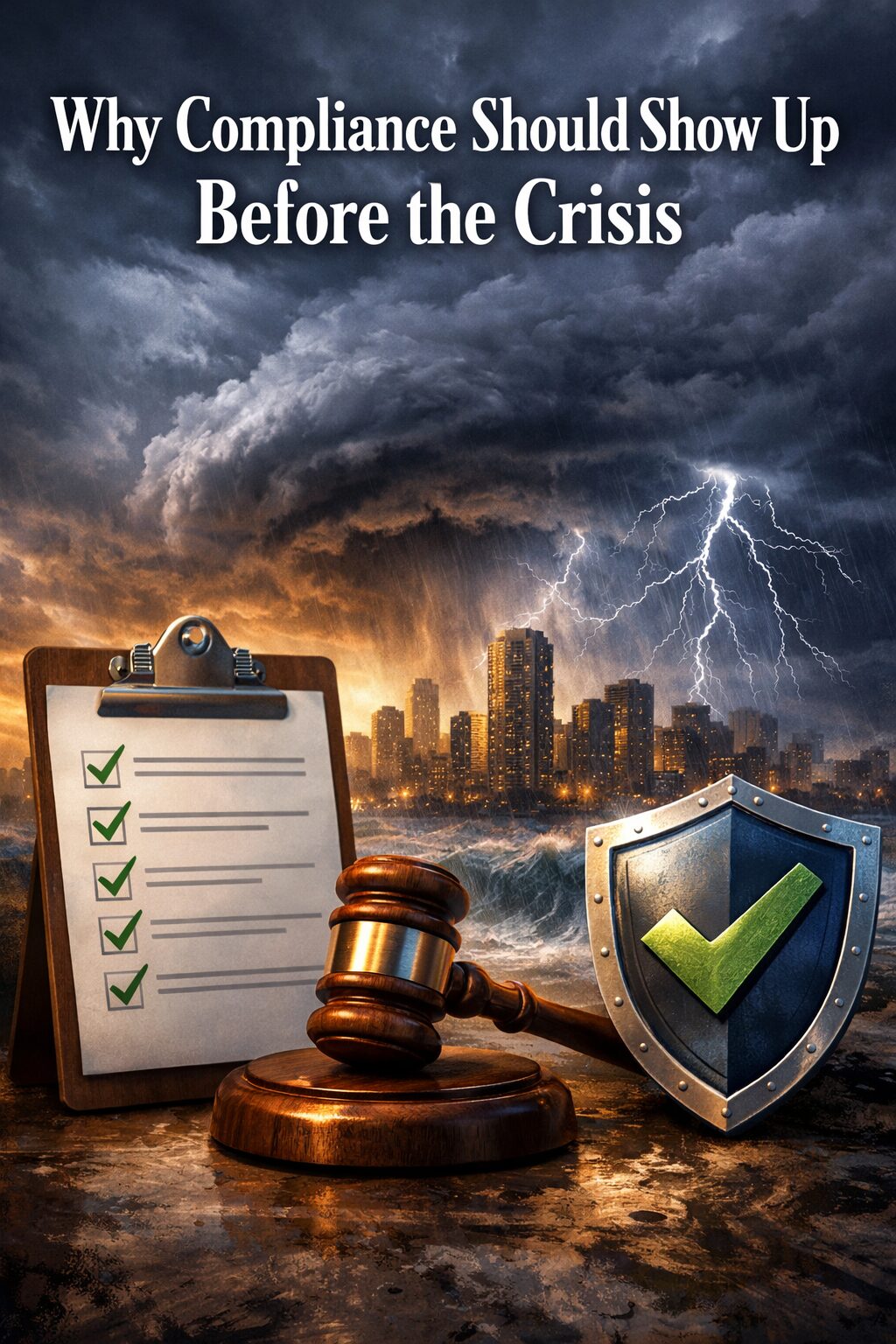
How Compliance Should Show Up Before the Crisis

Recently, my colleague Matt Kelly wrote a blog post about retaliation against Chief Compliance Officers (CCOs). Matt and I explored it in an episode of the podcast Compliance into the Weeds. Matt’s post and our discussion crystallized one of the frustrations of the CCO role: compliance is often experienced solely by senior management as a late-arriving messenger of bad news. When compliance walks into the room, something has already gone wrong. The tone changes. Defenses go up. Trust narrows.

Yet the most consequential moments for a CCO are precisely those situations where the stakes are highest. A potential regulatory disclosure. A decision about whether to notify a government agency. A moment where delay, missteps, or poor coordination can turn a manageable issue into an enterprise-level crisis. If compliance is only visible in those moments, the relationship with the CEO and executive leadership team is already at a disadvantage.

Interestingly, in our podcast, we explored a technique which might be termed “coaching management ahead of time”. Matt picked up the strategy of using a training borrowed from the cyber world of incident training for a cyber-attack. I see this as a very powerful way not only to communicate compliance but also to train on the specific issues senior management will face if a reportable compliance incident occurs. You could train on such hypotheticals by walking the executive leadership team through them so they understand the process, while also providing training on the specific issues.

I think this approach offers practical, repeatable ways to build trust with senior management before a crisis, so that when compliance raises a serious issue, the function is seen as a stabilizing force, not a source of panic.

The Core Problem: Compliance as the Bearer of Bad News

Many compliance officers do excellent technical work but still struggle to earn executive trust. The reason is not competence. It is timing and framing. Senior leaders often experience compliance in three narrow contexts:

  • An investigation has begun.
  • A whistleblower allegation has escalated; and/or
  • A regulator may need to be notified.

In those moments, compliance is necessarily directive. The CCO must slow decisions down, insist on process, and sometimes recommend outcomes executives would prefer to avoid. Without a foundation of trust, those recommendations can feel punitive or overly conservative. The solution is not softer messaging during crises. The solution is familiarity with the compliance process long before the crisis arrives.

Process Transparency as a Trust-Building Strategy

Trust is built through predictability. Senior executives are far more comfortable with difficult outcomes when they understand the process that leads there. This is where scenario-based training becomes one of the most underused tools in the compliance arsenal. Instead of waiting for a live issue, the CCO can walk the executive leadership team through realistic hypotheticals:

  • A fact pattern that suggests regulatory notification may be required
  • How compliance evaluates credibility and materiality
  • Who is involved at each stage and why
  • What decisions will management be asked to make
  • What actions help, and what actions make things worse

These sessions are not about assigning blame or rehearsing fear. They are about demystifying how compliance operates when the stakes are high.

Why Scenario-Based Training Works With Executives

Scenario-based discussions resonate with executive teams for several reasons. First, they are practical. Executives do not need another policy overview. They want to know what actually happens when something goes wrong. Second, they are respectful of executive time and intelligence. A well-designed hypothetical treats leadership as decision-makers, not students. Third, they normalize compliance involvement.

When executives have already walked through a compliance-led process in a low-pressure setting, that process feels familiar rather than threatening during a real event. Most importantly, scenario-based training reframes compliance from a reactive function to a preparedness function.

The Strategic Role of Informal Engagement

These conversations do not need to occur only in formal training sessions. In fact, some of the most effective trust-building happens outside structured settings.

  • A short walkthrough during an executive offsite.
  • A tabletop discussion over lunch.
  • A casual conversation that begins with, “Let me show you how we would handle this if it ever happened.”

These informal touchpoints matter because they remove fear from the equation. They allow executives to ask questions they might not ask during a live issue. They also allow compliance to show judgment, nuance, and business awareness. This is not a charm offensive. It is a deliberate relationship strategy.

Training on What Not to Do

One of the most valuable elements of scenario-based transparency is the ability to explain mistakes before they occur. Executives often want to help in a crisis. That instinct, while well-intentioned, can create problems. Premature document reviews. Side conversations. Incomplete recollections. Overconfident assurances.

Scenario training allows the CCO to say, in advance, “Here is what helps us protect the company,” and just as importantly, “Here is what can unintentionally make things worse.” When executives understand these boundaries ahead of time, compliance interventions during a real issue feel protective rather than restrictive.

From Messenger of Doom to Stabilizing Force

When compliance has invested in transparency and education, something important shifts. When the CCO later says, “We believe this may require regulatory notification,” that recommendation is no longer heard in isolation. It is understood as part of a known, previously discussed process.

Executives may not like the conclusion, but they trust the path that led there. That trust allows compliance to do its job effectively. It reduces friction. It shortens response time. It improves decision quality. Most importantly, it positions compliance as an advisor whose presence brings structure and clarity to uncertainty.

What Compliance Officers Should Take Away

For compliance officers, the lesson is not about presentation skills or tone management. It is about timing and familiarity. If senior management only experiences compliance during moments of stress, compliance will always feel adversarial. If senior management understands the compliance process before the stress arrives, compliance becomes a stabilizing influence.

Scenario-based training, informal engagement, and process transparency are not “nice to have” activities. They are strategic tools for relationship-building at the highest levels of the organization. The most trusted CCOs are not those who avoid bringing bad news. They are the ones who ensure that when bad news arrives, it is delivered within a framework everyone already understands. That is how compliance earns trust before the crisis and credibility during it.

Categories
Daily Compliance News

Daily Compliance News: January 26, 2026, The Pardon of Tim Leissner Edition

Welcome to the Daily Compliance News. Each day, Tom Fox, the Voice of Compliance, brings you compliance-related stories to start your day. Sit back, enjoy a cup of morning coffee, and listen in to the Daily Compliance News. All, from the Compliance Podcast Network. Each day, we consider four stories from the business world, compliance, ethics, risk management, leadership, or general interest for the compliance professional.

Top stories include:

  • 1MDB lynchpin Tim Leissner wants a pardon. (Bloomberg)
  • Marcos is under impeachment over Philippine corruption. (Bloomberg)
  • UK investigating Meta’s compliance with data requests. (Reuters)
  • China accuses top general of corruption. (WSJ)
Categories
31 Days to More Effective Compliance Programs

31 Days to a More Effective Compliance Program: Day 26 – Elevating the Role and Independence of the Chief Compliance Officer

Welcome to 31 Days to a More Effective Compliance Program. Over this 31-day series in January 2026, Tom Fox will post a key component of a best-practice compliance program each day. By the end of January, you will have enough information to create, design, or enhance a compliance program. Each podcast will be short, at 6-8 minutes, with three key takeaways that you can implement at little or no cost to help update your compliance program. I hope you will join each day in January for this exploration of best practices in compliance. In today’s Day 26 episode, we ponder the evolving stature and authority of the CCO within organizations, as highlighted by recent guidelines and regulations.

Key highlights:

  • Key Inquiries Around the CCO and Compliance Function
  • Importance of CCO Certification and Court Decisions
  • Critical Takeaways for Compliance Professionals

Resources:

Listeners to this podcast can receive a 20% discount on The Compliance Handbook, 6th edition, by clicking here.

Categories
FCPA Compliance Report

FCPA Compliance Report – Navigating Export Control and Trade Sanction Challenges in Venezuela: Insights from Brent Carlson

Welcome to the award-winning FCPA Compliance Report, the longest-running podcast in compliance. In this inaugural episode of 2026, Tom Fox welcomes back Brent Carlson, a specialist in trade and economic sanctions, focusing on compliance issues related to Venezuela.

Tom and Brent discuss the shifting political landscape, potential business opportunities in the energy sector, and the steps compliance professionals need to take to navigate new regulations and restrictions from the export control and trade sanctions perspective. Brent emphasizes the importance of a robust, business-aligned compliance strategy, a non-siloed approach involving all risk disciplines, and proactive dialogue with regulators. They also discuss the heightened enforcement landscape and the need for companies to remain vigilant and adaptable in a rapidly changing global environment.

Key highlights:

  • Focus on Venezuela: Navigating Export Controls and Sanctions
  • Business Opportunities and Risks in Venezuela
  • Importance of Understanding Business Operations
  • Board of Directors: Asking the Right Questions
  • Geopolitical Changes and Risk Management

Resources:

Brent Carlson on LinkedIn

Red Flags Rising website

Tom Fox

Five-Part Blog Post Series on Doing Business in Venezuela on the FCPA Compliance and Ethics Blog

Instagram

Facebook

YouTube

Twitter

LinkedIn