Categories
Trekking Through Compliance

Trekking Through Compliance: Episode 72 – From Zetar to the C-Suite: Why Expertise Matters in Internal Investigations

In the corporate compliance world, an internal investigation is often the moment of truth. Whether triggered by a whistleblower complaint, a regulatory inquiry, or a suspicious transaction, the investigation’s quality can determine whether the organization resolves the matter cleanly or faces prolonged legal, financial, and reputational damage.

Star Trek: The Original Series’ “The Lights of Zetar” offers a surprisingly apt allegory for why skilled professionals must handle these investigations. The crew must conduct what is, in effect, a complex and high-stakes investigation. Their approach yields five lessons that every compliance professional should apply when running an internal investigation.

Lesson 1: Preserve and Protect Critical Evidence Immediately

Illustrated By. When the lights first strike, the Enterprise experiences sudden and unexplained system failures. The crew immediately records sensor data, secures operational logs, and isolates the damage.

Compliance Lesson. Without swift action, crucial evidence can be lost, whether through routine data overwrites, deliberate destruction, or simple mishandling.

Lesson 2: Bring in the Right Expertise Early

Illustrated By: Once Mira Romaine exhibits strange symptoms, Dr. McCoy, Spock, and Scotty each contribute their specialized knowledge, medical science, Vulcan telepathy, and engineering diagnostics, to piece together what is happening.

Compliance Lesson. A proper internal investigation is rarely a one-person job. Complex matters often require diverse expertise: forensic accounting, cybersecurity, HR policy, legal analysis, and industry-specific regulatory knowledge.

Lesson 3: Keep an Open Mind—The First Explanation May Be Wrong

Illustrated By: Only after gathering more evidence do they realize the lights are disembodied intelligences, survivors of the destroyed planet Zetar, seeking a human host.

Compliance Lesson. In corporate investigations, jumping to conclusions based on initial appearances can lead to flawed outcomes.

Lesson 4: Protect the People Involved Throughout the Process

Illustrated By: Mira Romaine is not treated merely as a subject of inquiry; she is a valued crew member whose well-being is a priority. The investigation’s goal is not just to “solve the problem” but to save her life.

Compliance Lesson. In internal investigations, individuals, whether complainants, witnesses, or subjects, must be treated with dignity and fairness. Mishandling these relationships can result in legal claims, loss of employee trust, and reputational harm.

Lesson 5: Deliver Actionable Solutions, Not Just Findings

Illustrated By: Once the crew determines that the Zetarians are inhabiting Lt. Romaine’s body, they devise a targeted plan to remove them using controlled atmospheric pressure in a medical isolation chamber.

Compliance Lesson. An investigation that ends with a report but no corrective action is a missed opportunity. The ultimate measure of success is not uncovering what happened but ensuring it does not happen again.

Final ComplianceLog Reflections

The Lights of Zetar reminds us that investigations are not abstract exercises; they are missions with real people, high stakes, and long-term consequences. The Enterprise crew approached their challenge with urgency, thoroughness, and empathy. For compliance officers, the lesson is clear: every internal investigation is an opportunity to demonstrate integrity, competence, and leadership. The quality of your investigative process will be remembered long after the incident itself fades from memory.

Resources:

⁠⁠Excruciatingly Detailed Plot Summary by Eric W. Weisstein⁠⁠

⁠⁠MissionLogPodcast.com⁠⁠

⁠⁠Memory Alpha

Categories
Blog

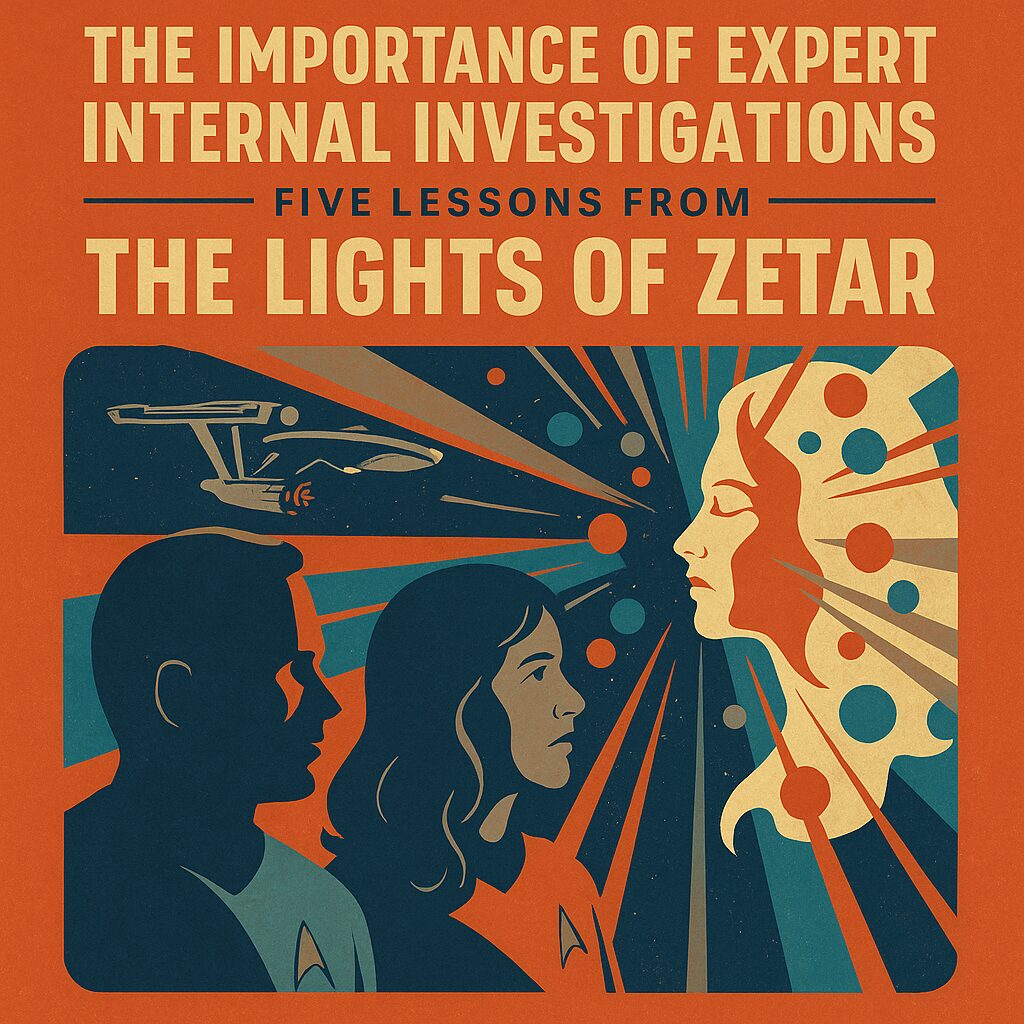
The Importance of Expert Internal Investigations: Five Lessons from Star Trek’s The Lights of Zetar

In the corporate compliance world, an internal investigation is often the moment of truth. Whether triggered by a whistleblower complaint, a regulatory inquiry, or a suspicious transaction, the investigation’s quality can determine whether the organization resolves the matter cleanly or faces prolonged legal, financial, and reputational damage.

Star Trek: The Original Series’ “The Lights of Zetar” offers a surprisingly apt allegory for why skilled professionals must handle these investigations. In this episode, the Enterprise is on its way to Memory Alpha, the Federation’s central library, when it encounters a mysterious, pulsating light phenomenon. The lights incapacitate crew members, damage ship systems, and, most dangerously, invade the mind of Lieutenant Mira Romaine, who is accompanying the mission.

The crew must determine what the lights are, what they want, and how to neutralize them before they destroy both Romaine and Memory Alpha’s priceless archives. In doing so, they conduct what is, in effect, a complex and high-stakes investigation. Their approach yields five lessons that every compliance professional should apply when running an internal investigation.

Lesson 1: Preserve and Protect Critical Evidence Immediately

Illustrated By. When the lights first strike, the Enterprise experiences sudden and unexplained system failures. The crew immediately records sensor data, secures operational logs, and isolates the damage.

Compliance Lesson. In corporate investigations, the “scene of the incident” may be a server containing emails, a ledger of transactions, or a manager’s office with physical records. Without swift action, crucial evidence can be lost, whether through routine data overwrites, deliberate destruction, or simple mishandling.

How to apply this to investigations?

  • Secure relevant electronic and physical records as soon as the investigation begins.
  • Suspend auto-delete protocols and ensure data preservation orders are issued.
  • Document the chain of custody for all materials.

In The Lights of Zetar, the crew’s rapid evidence capture gave them the information needed to trace the lights’ origins and capabilities. Without it, they would have been operating blind.

Lesson 2: Bring in the Right Expertise Early

Illustrated By: Once Mira Romaine exhibits strange symptoms, Dr. McCoy, Spock, and Scotty each contribute their specialized knowledge, medical science, Vulcan telepathy, and engineering diagnostics to piece together what is happening.

Compliance Lesson. A proper internal investigation is rarely a one-person job. Complex matters often require diverse expertise: forensic accounting, cybersecurity, HR policy, legal analysis, and industry-specific regulatory knowledge. Relying solely on generalists can miss critical nuances.

How to apply this to investigations?

  • Assemble a multidisciplinary team at the outset, including internal experts and outside specialists if needed.
  • Ensure each team member understands their role and investigative boundaries.
  • Involve counsel early to maintain privilege over sensitive findings.

Just as the Enterprise crew leveraged multiple skill sets to solve a problem no one discipline could crack alone, compliance officers should make strategic use of the right expertise from day one.

Lesson 3: Keep an Open Mind—The First Explanation May Be Wrong

Illustrated By: Initially, the crew assumes the lights are a natural space phenomenon. Only after gathering more evidence do they realize the lights are disembodied intelligences, survivors of the destroyed planet Zetar, seeking a human host.

Compliance Lesson. In corporate investigations, jumping to conclusions based on initial appearances can lead to flawed outcomes. What looks like simple employee misconduct may be part of a larger systemic control failure; what appears to be a minor accounting error may conceal intentional fraud.

How to apply this to investigations?

  • Form working hypotheses, but treat them as provisional until confirmed by evidence.
  • Explore alternative explanations, even if they seem less likely.
  • Allow the facts, not convenience or organizational pressure, to drive conclusions.

Expert investigators, like the Enterprise crew, pivot their theories as new facts emerge.

Lesson 4: Protect the People Involved Throughout the Process

Illustrated By: Mira Romaine is not treated merely as a subject of inquiry; she is a valued crew member whose well-being is a priority. The investigation’s goal is not just to “solve the problem” but to save her life. Kirk ensures she receives medical care and emotional support even as they work to understand her condition.

Compliance Lesson. In internal investigations, individuals, whether complainants, witnesses, or subjects, must be treated with dignity and fairness. Mishandling these relationships can result in legal claims, loss of employee trust, and reputational harm.

How to apply this to investigations?

  • Maintain confidentiality to the fullest extent possible.
  • Protect against retaliation for cooperation.
  • Provide updates when feasible to those affected, balancing transparency with investigative integrity.

A humane approach builds trust in the compliance function and encourages future reporting.

Lesson 5: Deliver Actionable Solutions, Not Just Findings

Illustrated By: Once the crew determines that the Zetarians are inhabiting Lt. Romaine’s body, they devise a targeted plan to remove them using controlled atmospheric pressure in a medical isolation chamber. They do not stop at identifying the cause; they implement the cure.

Compliance Lesson. An investigation that ends with a report but no corrective action is a missed opportunity. The ultimate measure of success is not uncovering what happened but ensuring it does not happen again.

How to apply this to investigations?

  • Pair findings with concrete, practical recommendations for remediation.
  • Address both the immediate problem and any systemic weaknesses uncovered.
  • Follow up to confirm that corrective actions are implemented and effective.

The Enterprise crew’s solution not only saved Mira but also prevented the Zetarians from posing a future threat, exemplifying the kind of preventive mindset compliance investigations should aim for.

Why “The Lights of Zetar” Resonates for Compliance

In The Lights of Zetar, the stakes were both personal and institutional: the survival of a crew member and the preservation of Memory Alpha’s vast knowledge. The investigation had to be thorough, rapid, multidisciplinary, and compassionate, precisely the hallmarks of a high-quality corporate internal investigation.

An expert investigation:

  • Safeguards evidence before it’s lost.
  • Leverages the right mix of skills.
  • Keeps the fact-finding process objective.
  • Protects people while uncovering the truth.
  • Produces actionable, lasting solutions.

When these principles are followed, the compliance function not only resolves incidents but also strengthens the organization’s overall resilience.

Final ComplianceLog Reflections

The Lights of Zetar reminds us that investigations are not abstract exercises—they are missions with real people, high stakes, and long-term consequences. The Enterprise crew approached their challenge with urgency, thoroughness, and empathy.

For compliance officers, the lesson is clear: every internal investigation is an opportunity to demonstrate integrity, competence, and leadership. The quality of your investigative process will be remembered long after the incident itself fades from memory.

In other words, be the Enterprise—methodical, humane, and relentless in pursuit of the truth.

Resources:

⁠⁠Excruciatingly Detailed Plot Summary by Eric W. Weisstein⁠⁠

⁠⁠MissionLogPodcast.com⁠⁠

⁠⁠Memory Alpha

Categories
Trekking Through Compliance

Trekking Through Compliance: Episode 68 – Deception in the Asylum: 5 Compliance Investigation Insights from “Whom Gods Destroy

Today, we take a journey to one of Star Trek: The Original Series’ most intense psychological dramas: “Whom Gods Destroy.” On its surface, this episode is a tale of madness, manipulation, and peril. But for the vigilant compliance professional, it’s a trove of investigative lessons on dealing with deception, managing risk, and safeguarding your organization in an unpredictable world. Let’s beam down to Elba II, a remote asylum for the galaxy’s most dangerous criminally insane, to examine what this wild ride can teach us about effective corporate investigations.

1. Never Accept Surface Appearances—Verify, Then Trust

Illustrated By: Kirk and Spock are greeted by what appears to be the asylum’s director. Only later do they discover that Garth, using his ability to alter his appearance, is impersonating Cory and is, in fact, in control of the facility.

Compliance Lesson. In investigations, never accept things at face value.

2. Psychological Manipulation: Beware the Power of Charisma

Illustrated By: Garth, in his guise as both himself and others, uses his charisma and manipulation to sow confusion and loyalty among the other inmates.

Compliance Lesson. In many investigations, the most dangerous individuals are those who wield psychological influence. Charismatic leaders, managers, or employees can persuade others to cover up wrongdoing, falsify records, or sabotage investigative efforts.

3. The Importance of Access Controls and Segregation of Duties

Illustrated By: By centralizing control, Garth can manipulate everyone in the facility and thwart any rescue attempt.

Compliance Lesson: A key safeguard against fraud and misconduct is the principle of segregation of duties and strict access controls. If one individual or a small group can manipulate systems without oversight, your organization is vulnerable to abuse.

4. Recognize Red Flags and Act on Them Swiftly

Illustrated By: Despite several warning signs, unusual behavior from the “director,” cryptic comments from the staff, and security lapses, Kirk and Spock hesitate before taking decisive action.

Compliance Lesson. Every investigation reveals red flags. The question is, will your team recognize them early and act decisively?

5. Collaboration Is the Key to Outwitting Deception

Illustrated By: Spock’s skepticism and methodical approach are essential to cutting through the confusion and revealing the truth.

Compliance Lesson. Investigations should never be a solo endeavor. Collaboration, clear communication, and checks and balances are essential to unmasking sophisticated schemes.

Final ComplianceLog Reflections

“Whom Gods Destroy” may be set in a galaxy far away, but its lessons are as relevant to the compliance investigator as they are to any starship captain. In a world where deception can take many forms, such as charisma, forged documents, technological manipulation, or even trusted colleagues, your best defense is disciplined skepticism, rigorous process, and a commitment to the truth above all else.

In corporate investigations, the price of being deceived is high, but the rewards of vigilance, skepticism, and teamwork are higher. So, as you face your own “Elba II,” remember the lessons of Kirk and Spock: Trust the process, trust your team, and always keep your eyes open for the masks that others might wear.

Resources:

⁠⁠Excruciatingly Detailed Plot Summary by Eric W. Weisstein⁠⁠

⁠⁠MissionLogPodcast.com⁠⁠

⁠⁠Memory Alpha

Categories
FCPA Compliance Report

FCPA Compliance Report – 10 Core Principles for Effective Internal Investigations with Michelle Peirce

Welcome to the award-winning FCPA Compliance Report, the longest-running podcast in compliance. In this episode, Tom Fox welcomes Michelle Peirce from Hinckley Allen, where she co-chairs the White Collar and Government Enforcement Group.

They take a deep dive into Michelle’s article on the 10 Core Principles Common to Internal Investigations, discussing topics such as the importance of understanding the investigation’s purpose, maintaining privilege, the role of an engagement letter, deciding between written reports and verbal summaries, and the significance of billing and internal communications. Michelle also shares her insights from her professional background, including her experience as a special assistant district attorney, and touches on current pressures on compliance tied to self-disclosure to the DOJ. The conversation offers a comprehensive guide for organizations on conducting successful internal investigations.

Key highlights:

  • Role and Challenges in Internal Investigations
  • Core Principles of Internal Investigations
  • Importance of Privilege and Engagement Letters
  • Written vs. Verbal Reports
  • Order and Structure of Investigations
  • Professionalism and Billing in Investigations

Resources:

Michelle Peirce on LinkedIn

Michelle Peirce at Hinckley Allen

10 Core Principles Common to Internal Investigations

Tom Fox

Instagram

Facebook

YouTube

Twitter

LinkedIn

For more information on the use of AI in compliance programs, my new book is Upping Your Game. You can purchase a copy of the book on Amazon.com.

Categories
Blog

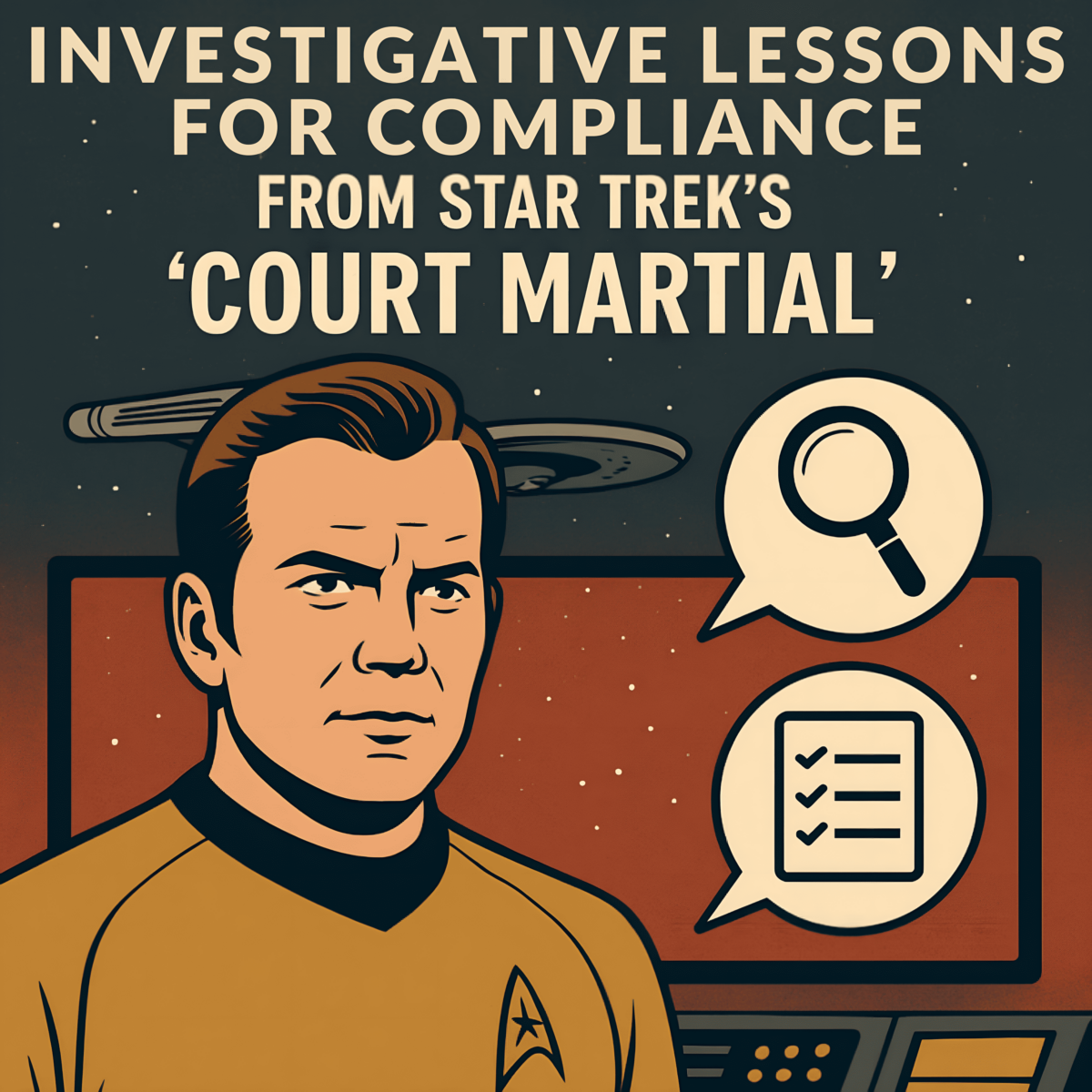
Investigative Lessons from Court Martial

Star Trek: The Original Series often illustrates complex ethical and procedural dilemmas that resonate deeply within the realm of corporate compliance. The episode “Court Martial,” in particular, offers compelling insights into effective investigative techniques and the challenges they present. In this narrative, Captain James T. Kirk faces accusations of negligent homicide, leading to a rigorous and revealing investigation. The drama unfolding aboard the USS Enterprise presents significant lessons for compliance professionals tasked with conducting internal investigations.

Today, we explore several critical investigative lessons from “Court Martial,” starting with a vivid scene from the episode, followed by the practical compliance takeaway.

1. Maintain Objectivity to Ensure Credibility

Illustrated By: Captain Kirk is accused of prematurely ejecting a research pod containing crewman Ben Finney during an ion storm. Initial computer records indicate Kirk’s guilt, prompting immediate suspicion.

Compliance investigations must always maintain objectivity. When allegations surface, compliance officers must approach each situation without preconceived notions or bias. Kirk’s investigators initially rely solely on computer data, presuming its infallibility. In corporate compliance, similarly, relying exclusively on initial reports or unverified data risks compromised investigations. Objectivity requires considering all available evidence impartially, interviewing multiple witnesses, and rigorously verifying the accuracy of data before drawing a conclusion. Objectivity protects the credibility of the compliance function and ensures fair treatment for all involved.

2. Validate Data Integrity and Authenticity

Illustrated by: Lieutenant Commander Spock meticulously tests the Enterprise’s computer system, uncovering evidence of intentional data tampering. He discovers discrepancies indicating the falsification of records used against Kirk.

Spock’s rigorous testing of the Enterprise’s data integrity underscores a fundamental investigative principle: always verify the authenticity of data. Compliance professionals cannot rely solely on digital records or untested evidence. Ensuring the integrity of investigative data involves thorough audits, cybersecurity verifications, and analytical validations. Investigations should routinely include data integrity checks and forensic audits to confirm that no manipulation or corruption has occurred. Integrity validations protect the investigation’s accuracy and reinforce trust in compliance processes.

3: Thoroughly Interview Witnesses and Stakeholders

Illustrated By: During Kirk’s trial, multiple crew members testify about Kirk’s character and actions. The varying perspectives initially add complexity but ultimately provide clarity about the underlying truth.

Effective compliance investigations require comprehensive witness interviews to build a complete understanding. Witnesses provide invaluable context, nuances, and insights beyond documentary evidence alone. Interviewing diverse stakeholders allows compliance professionals to develop a multidimensional perspective of events. Interviews should be carefully planned, meticulously documented, and designed to uncover not just factual information but also cultural dynamics, underlying motivations, and potential inconsistencies. Robust witness interviews help paint a complete investigative picture, greatly enhancing accuracy and reliability.

4. Beware of Confirmation Bias

Illustrated By: Initially, Starfleet Command investigators quickly embrace apparent computer evidence against Kirk, displaying confirmation bias driven by the expectation that the computer system’s reliability is absolute.

Compliance officers must guard against confirmation bias, the human tendency to seek or interpret evidence in a way that confirms preexisting beliefs or assumptions. Confirmation bias compromises investigative accuracy, potentially leading to unjust outcomes. To mitigate this, compliance investigators must consciously seek information that challenges initial assumptions, consider alternative explanations, and remain vigilant for indicators that contradict their preliminary conclusions. Compliance programs should incorporate systematic safeguards—such as peer reviews or independent validation—to reduce bias, thereby fostering robust and impartial investigations.

5. Documentation and Transparency Enhance Investigation Integrity

Illustrated By: Throughout Kirk’s trial, Starfleet meticulously documents each proceeding, transparently demonstrating adherence to investigative protocols and ensuring accountability.

Thorough documentation and transparency are critical in corporate investigations. Complete, accurate, and contemporaneous documentation enhances the credibility of investigations, protects against allegations of unfairness or misconduct, and strengthens the defensibility of compliance. Investigative processes should be transparently documented, recording every significant step, the rationale behind decisions, and the evidence gathered. Such meticulous transparency ensures that compliance teams can confidently explain their methods and conclusions, reinforcing trust among employees, regulators, and other stakeholders.

6. Ethical Leadership Reinforces Compliance Integrity

Illustrated By: Despite significant personal and professional risk, Captain Kirk consistently demonstrates ethical integrity, willingly submitting to the investigative and judicial processes without interference or evasion.

Ethical leadership profoundly influences compliance investigations. Leaders who openly embrace investigative processes, even when personally inconvenient or challenging, set powerful examples that foster organizational trust and ethical standards. Compliance officers must similarly lead investigations transparently and ethically, demonstrating an unwavering commitment to integrity. When leadership visibly upholds investigative processes without attempting to undermine or influence outcomes, organizations cultivate a deeper culture of compliance, emphasizing that ethical adherence takes precedence over personal convenience or hierarchical influence.

7. Accountability Builds Trust and Organizational Integrity

Illustrated By: The resolution of the investigation leads to accountability, restoring Kirk’s reputation and revealing the true culprit, Ben Finney, who had staged his apparent death and manipulated evidence out of personal grievance.

Compliance investigations must result in clear accountability to maintain organizational trust and integrity. Investigations lacking follow-through on identified misconduct undermine the credibility of compliance efforts. Conversely, holding responsible parties genuinely accountable, regardless of their position or seniority, significantly enhances an organization’s commitment to ethical standards. Compliance teams must ensure the consistent and impartial enforcement of corrective actions, sanctions, or procedural adjustments arising from investigations. Genuine accountability reinforces compliance programs, fortifies organizational trust, and deters future misconduct.

Final ComplianceLog Reflections

“Court Martial” compellingly illustrates key principles of critical compliance investigations: maintaining objectivity, validating data integrity, conducting thorough witness interviews, avoiding confirmation bias, ensuring transparent documentation, exemplifying ethical leadership, and reinforcing accountability. Each investigative lesson from Captain Kirk’s dramatic ordeal directly translates into best practices for compliance professionals navigating complex corporate scenarios.

Ultimately, effective compliance investigations hinge upon fairness, rigor, and transparency. Compliance professionals can profoundly strengthen investigative integrity by applying these timeless Star Trek lessons, creating robust frameworks that earn stakeholder confidence, protect the organization’s reputation, and affirm a commitment to uncompromising ethical standards.

Let us integrate these investigative lessons boldly into our compliance programs, ensuring that we consistently uphold and exemplify the highest investigative standards. By doing so, compliance professionals truly become organizational champions and guardians of integrity, transparency, and trust.

Resources:

Excruciatingly Detailed Plot Summary by Eric W. Weisstein

MissionLogPodcast.com

Memory Alpha

Categories
Trekking Through Compliance

Trekking Through Compliance: Investigative Lessons from Court Martial

Show Summary

The episode “Court Martial,” in particular, offers compelling insights into effective investigative techniques and the challenges they present. In this narrative, Captain James T. Kirk faces accusations of negligent homicide, leading to a rigorous and revealing investigation. Today, we explore several critical investigative lessons from “Court Martial,” starting with a vivid scene from the episode, followed by the practical compliance takeaway.

Lesson 1: Maintain Objectivity to Ensure Credibility

Illustrated By: Captain Kirk is accused of prematurely ejecting a research pod containing crewman Ben Finney during an ion storm. Initial computer records indicate Kirk’s guilt, prompting immediate suspicion.

Compliance investigations must always maintain objectivity, which requires considering all available evidence impartially, interviewing multiple witnesses, and rigorously verifying the accuracy of data before concluding.

Lesson 2: Validate Data Integrity and Authenticity

Illustrated by: Lieutenant Commander Spock meticulously tests the Enterprise’s computer system, uncovering evidence of intentional data tampering. He discovers discrepancies indicating the falsification of records used against Kirk.

Spock’s rigorous testing of the Enterprise’s data integrity underscores a fundamental investigative principle: always verify the authenticity of data.

Lesson 3: Thoroughly Interview Witnesses and Stakeholders

Illustrated By: During Kirk’s trial, multiple crew members testify about Kirk’s character and actions.

Effective compliance investigations require comprehensive witness interviews to build a complete understanding.

Lesson 4: Beware of Confirmation Bias

Illustrated By: Initially, Starfleet Command investigators quickly embrace apparent computer evidence against Kirk, displaying confirmation bias driven by the expectation that the computer system’s reliability is absolute.

Compliance officers must guard against confirmation bias, the human tendency to seek or interpret evidence in a way that confirms preexisting beliefs or assumptions.

Lesson 5: Documentation and Transparency Enhance Investigation Integrity

Illustrated By: Throughout Kirk’s trial, Starfleet meticulously documents each proceeding, transparently demonstrating adherence to investigative protocols and ensuring accountability.

Meticulous transparency ensures compliance teams can confidently explain their methods and conclusions, reinforcing trust among employees, regulators, and other stakeholders.

Lesson 6: Ethical Leadership Reinforces Compliance Integrity

Illustrated By: Despite significant personal and professional risk, Captain Kirk consistently demonstrates ethical integrity, willingly submitting to the investigative and judicial processes without interference or evasion.

Compliance officers must lead investigations transparently and ethically, demonstrating an unwavering commitment to integrity and transparency.

Lesson 7: Accountability Builds Trust and Organizational Integrity

Illustrated By: The resolution of the investigation leads to accountability, restoring Kirk’s reputation and revealing the true culprit, Ben Finney, who had staged his apparent death and manipulated evidence out of personal grievance.

Compliance teams must ensure the consistent and impartial enforcement of corrective actions, sanctions, or procedural adjustments arising from investigations.

Final ComplianceLog Reflections

Ultimately, effective compliance investigations hinge upon fairness, rigor, and transparency. Compliance professionals can profoundly strengthen investigative integrity by applying these timeless Star Trek lessons, creating robust frameworks that earn stakeholder confidence, protect the organization’s reputation, and affirm a commitment to uncompromising ethical standards.

Let us integrate these investigative lessons boldly into our compliance programs, ensuring that we consistently uphold and exemplify the highest investigative standards. By doing so, compliance professionals truly become organizational champions and guardians of integrity, transparency, and trust.

Resources:

Excruciatingly Detailed Plot Summary by Eric W. Weisstein

MissionLogPodcast.com

Memory Alpha

Categories
Compliance Into the Weeds

Compliance into the Weeds: A Deep Dive into Employee Leaks and Corporate Culture

The award-winning Compliance into the Weeds is the only weekly podcast that takes a deep dive into a compliance-related topic, literally going into the weeds to explore a subject more fully. Are you looking for some hard-hitting insights on compliance? Look no further than Compliance into the Weeds! In this episode, Tom Fox and Matt Kelly discuss the issues surrounding employee leaks of confidential information, drawing on insights from a recent SCCE Europe event.

They also consider the motivations behind such leaks, including dissatisfaction with corporate culture and ineffective internal reporting channels, exemplified by the recent leaks at Facebook. The episode reviews measures compliance officers can take to prevent leaks, such as implementing tight access controls, encryption, and improving communication during investigations. Practical tips for reducing leaks and the importance of trust in internal reporting are also highlighted.

Key highlights:

  • Discussion on Employee Leaks
  • Facebook’s Toxic Culture (or not) and Leaks
  • Addressing Internal Speak-Up Culture
  • Practical Tips to Prevent Leaks
  • Modern Communication Challenges

Resources:

Matt in Radical Compliance

Tom

Instagram

Facebook

YouTube

Twitter

LinkedIn

Compliance into the Weeds was recently honored as one of the Top 25 Regulatory Compliance Podcast.

Categories
FCPA Survival Guide

FCPA Survival Guide – Step 10 – Lesson on Speak Up Culture, Triage, and Internal Investigations

How can you survive an FCPA enforcement action? In this special podcast series, Tom Fox and Nick Gallo lay out the Top 10 things you can do to reduce your overall fine and penalty, perhaps down to a full declination. All of the actions you can take come from recent DOJ prosecutions under the FCPA and speeches from DOJ representatives. This podcast, sponsored by Ethico, is the companion series to the book The FCPA Survival Guide: Surviving and Thriving a Foreign Corrupt Practices Act Enforcement Action. Today, we discuss lesson number 10, your investigation process.

Tom and Nick discuss the importance of establishing a culture where employees feel empowered to speak up, the process of triaging and conducting internal investigations, and the significance of these practices in modern compliance programs. They reflect on the shift in workforce mentality towards valuing integrity and the practical implications for ethics and compliance teams in today’s knowledge economy. They emphasize the necessity of effective internal reporting mechanisms and middle management’s strategic role in capturing risk intelligence. The conversation explores the challenges and opportunities in optimizing compliance processes to mitigate risks and demonstrate organizational effectiveness to regulators like the DOJ and SEC.

Key Highlights and Issues

  • The Importance of Speak Up Culture
  • Workforce Dynamics and Compliance
  • Challenges in Compliance Reporting
  • Whistleblower Programs and Internal Reporting
  • Optimizing Compliance Processes

Resources:

Nick Gallo on LinkedIn

Ethico

The FCPA Survival Guide: Surviving and Thriving a Foreign Corrupt Practices Act Enforcement Action

Tom

Instagram

Facebook

YouTube

Twitter

LinkedIn

Categories
Daily Compliance News

Daily Compliance News: April 30, 2024 – The Whitewash Edition

Welcome to the Daily Compliance News. Each day, Tom Fox, the Voice of Compliance, brings you compliance-related stories to start your day. Sit back, enjoy a cup of morning coffee and listen to the Daily Compliance News. All from the Compliance Podcast Network.

Each day, we consider four stories from the business world: compliance, ethics, risk management, leadership, or general interest for the compliance professional.

In today’s edition of Daily Compliance News:

  • Corporate investigations are under scrutiny.   (FT)
  • Vale and BHP propose reparations.  (FT)
  • The SCt will not hear Musk’s appeal of the SEC order. (Reuters)
  • What is a managerial city? (WaPo)

For more information on the Ethico ROI Calculator and a free White Paper on the ROI of Compliance, click here.

Categories
Compliance Tip of the Day

Compliance Tip of the Day: Employee Rights in an Interview

Welcome to “Compliance Tip of the Day,” the podcast where we bring you daily insights and practical advice on navigating the ever-evolving landscape of compliance and regulatory requirements.

Whether you’re a seasoned compliance professional or just starting your journey, our aim is to provide you with bite-sized, actionable tips to help you stay on top of your compliance game.

Join us as we explore the latest industry trends, share best practices, and demystify complex compliance issues to keep your organization on the right side of the law.

Tune in daily for your dose of compliance wisdom, and let’s make compliance a little less daunting, one tip at a time.

In this episode, we consider what employee rights you need to consider during an internal investigation.

For more information on the Ethico ROI Calculator and a free White Paper on the ROI of Compliance, click here.