Categories
Presidential Leadership Lessons for the Business Executive

Leadership Lessons from the Presidency of Zachary Taylor

In this episode, I consider what lessons might be learned from the presidency of Zachary Taylor the 12thPresident. Taylor only served 18 months, from 1849-1850. He died in office from over eating and drinking on the July 4thcelebration of 1850.

Taylor had a long career in the US Army prior to his election, during which time he successfully operated cotton plantations in Louisiana, Kentucky, and Mississippi. He was elected as a Whig, this despite refusing to commit himself to the party platform. He was the first President not to hold elective office. While Taylor is usually ranked in the bottom percentile of presidents, he is most generally described as more a forgettable president than a failed one. However, his biographer, John S. Eisenhower, argued he was the one man who could have hammered out a compromise on slavery that would have averted the civil war contemporaries. Finally, in the political realm, both Democrats and Whigs alike generally viewed his premature death as a national calamity.

What are some of the leadership lessons from the Presidency of Zachary Taylor.

1.Take a stand-One of the leadership lessons came from an inaction by Taylor. It began before he was even elected President, did not embrace the Whig political platform, or even declare himself a Whig until February of 1848 with the election only seven months away. He thought the President should stand above party politics, even to the extent of not taking a public stand and declaring himself as a Whig. Still, for leadership, the clear message is that sometimes you do have to take a stand.

2. You must be engaged-As a business leader, you must be engaged. Taylor’s military training influenced this thinking but that training and those instincts did not serve him as President.  A philosophy of trying to be above the fray just does not always work. As a CEO, a senior executive, a Board of Director, you must be engaged in your business. It does not mean you have to get into the weeds of tactical decision making but you must set the proper tone and then oversee it going forward.

3. Succession Planning-in the case of Taylor, we have that failure from a President who died in office, some 18 months into his presidency. Taylor and his Vice President, Millard Fillmore, did not even meet in person until only a week or two before the inauguration, so there was no time to build any sort of personal relationship. This lack of engagement with Fillmore, if not to consult, at least air out his thoughts and let him know which way he was thinking about issues, was a critical failure.

4. Conflicts of Interest-As a leader, you must be attuned to and stop conflicts of interest by your senior management. There was never any allegation that Taylor was personally corrupt. However, during the later days of his administration there was the Galphin affair. Before joining the Taylor cabinet, the Secretary of War, George W. Crawford, had served as a lawyer and had been involved in a 15-year lawsuit. During Taylor’s term and to his great embarrassment, he was paid nearly $100,000 to the President’s Secretary of War for his fee as counsel. The terms of the settlement meant that two Cabinet members had effectively offered a huge amount from the US treasury to a third member of the Cabinet. This was a huge scandal at the time.

A word on Taylor’s death. It seems that during the 1850 4th of July celebrations, Taylor consumed a large number of cherries, ice cream and milk. He subsequently came down with a severe stomach ache, which turned into something called cholera morbus. There is still a considerable debate over whether the doctors actually killed him with their treatment or whether he died from the intestinal ailment. Oddly enough, many of his cabinet members came down with very similar symptoms, so it seems most likely it was due to the sanitation in Washington DC at the time.

Categories
Daily Compliance News

December 1, 2022 the No Stinking Controls Edition

Welcome to the Daily Compliance News. Each day, Tom Fox, the Voice of Compliance, brings you four compliance-related stories to start your day. Sit back, enjoy a cup of morning coffee and listen to the Daily Compliance News. All from the Compliance Podcast Network.

Stories we are following in today’s edition of Daily Compliance News:

  • DHS uses AI to track the drug chain’s supply chain compliance. (WSJ)
  • SBF-no controls at Alameda. (WSJ)
  • DOJ to focus on oligarchs’ service providers. (FT)
  • Reading of judgment in $2bn Mozambique corruption case. (Aljazeera)

Categories
Blog

Farewell to Christine McVie and Improving Culture in the Era of Hybrid Work

It is not simply the Department of Justice (DOJ) who have emphasized corporate culture over the past 14 months. Many companies and compliance professionals have worried about culture since the Covid-19 pandemic forced organizations to adapt to new working arrangements which, by their nature, isolated employees. Now with the return to work in the form of hybrid work, many compliance professionals are thinking about how to re-engage employees from a cultural perspective in a manner which will meet the new DOJ strictures announced by Deputy Attorney General (DAG) Lisa Monaco in her October 2021 speech.

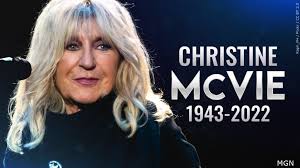
Before we get to today’s blog, I want to take a few lines to mourn the passing of Christine McVie, from the mega-Super Group Fleetwood Mac. She is the first of their five-person classic line up to pass. She was married to bassist John McVie during part of her tenure with the group. While most fans focused on Stevie Nicks as the lead singer of the group, for me, the top voice was always McVie. Husky and sultry, it was the perfect counterpoint to Nicks. McVie was also the band’s keyboardist and, more importantly, a fantastic songwriter. Her New York Times (NYT) obituary reported that in the band’s Fleetwood Mac’s “Greatest Hits” anthology, which was released in 1988 and sold eight million copies, McVie “either wrote or co-wrote half of its 16 tracks.” Some of the songs she wrote (or co-wrote) included: Say You Love Me, You Make Lovin’ Fun, Hold Me, Don’t Stop, Over My Head and Little Lies.

I was intrigued by a recent Harvard Business Review (HBR) article, entitled Revitalizing Culture in the World of Hybrid Work, reviewing a Gartner study entitled ‘Evolve Culture & Leadership for the Hybrid Workplace’. The article noted, “two-plus years into the pandemic, many leaders worry that remote and hybrid work are undermining their organizations’ culture. Their concerns aren’t entirely misplaced: A 2022 global study by the research and advisory firm Gartner found that just 25% of remote or hybrid knowledge workers feel connected to their company’s culture. But forcing employees back to the office is risky, as CEOs including Elon Musk and Jamie Dimon have discovered firsthand. Companies should take another tack.”

Indeed, the article quoted Alexia Cambon, a research director in Gartner’s HR practice and a principal author of the study, who said, “I find it ironic when leaders say they need to bring workers back to the office because of culture. They’re going to get the opposite of what they hope for. Instead of viewing hybrid work as a disruption to the cultural experience, leaders should see it as an opportunity to build culture differently.” The reality is that even with the rantings of Musk, hybrid work is here to stay not simply because employees want it, but it makes a company run more efficiently.

Cambon explained that culture has two components. The first is alignment, which she defined as “employees know what the culture is and believe that it is right for the firm.” The second is “connect­edness, which means that those same employees both “identify with and care about the culture.” The Gartner survey of “more than 4,500 knowledge workers and 200 HR leaders showed that in-​office mandates drove connectedness sharply down. Among employees with “radical flexibility” (defined as considerable freedom over location, schedule, work volume, team, and projects), 53% reported a high degree of connectedness, whereas just 18% of those with low flexibility did so.”

Understanding this culture dichotomy is important because most compliance professionals are struggling with how to re-engage employees with their corporate culture. Certainly, the Monaco Memo mandates around corporate culture are also driving these concerns. The starting point is to realize that pre-pandemic most efforts to imbue and communicate about corporate culture were around alignment. Compliance professionals tended to believe that “connectedness would occur more or less by osmosis.” Obviously, this approach needs to be rethought in a hybrid working environment “where employees spend 65% less time in offices than they did before the pandemic.” Fortunately, the article provides a three-step roadmap for compliance professionals to do so.

Communicate culture through your organization’s work. The pandemic showed that productivity increased when employees worked from home as “People often have more time for deep work.” An organization needs to use this insight as an “opportunity for employers to instill culture through daily tasks.” Cambon believes, “Every time you engage in a task, you should see the corporate culture reflected in it.” To accomplish this compliance professionals should audit “firm’s work processes to make sure they are compatible with the intended culture… “Say you want your firm to be innovative, forward-thinking, and fast-paced. If your methodologies are bureaucratic and your systems have constant technical glitches, that will undermine the culture.” For the compliance professional, it would allow you to reinforcement your culture messaging literally with every task an employee engages in.

Connect through emotional proximity. Musk and Dimon believing that “in-office interactions sustain culture confuses physical proximity with the more important sensation of emotional proximity.”  They are very different as “physical proximity is being in the same space as another individual” whereas “emotional proximity is being of importance to others.” Yet with fewer workplace interactions, each exchange can make a much stronger impact. It allows and even requires that meetings become more efficient so as not to waste everyone’s time. Compliance professionals can help the business leaders “create moments of emotional proximity by helping remote employees see how their work connects to the company mission.” Most importantly, the article states, “The more employees feel that their contributions are valuable, the more connected to the culture they become.”

Shift from optimizing corporate culture to fostering microcultures. Every Chief Compliance Officer (CCO) at a multinational understands the challenge of creating a strong corporate culture while also allowing local microcultures to thrive. But this challenge can provide an opportunity for “team-level experiences increased connectedness substantially more than enterprise-wide initiatives did. As a compliance professional, you can provide the “guidance to sail in the right direction” without prescribing specific norms and behaviors. The article concludes, “The pandemic has radically changed how employees experience corporate culture, and firms must embrace the new reality. “By relying less on osmosis to drive connectedness and more on intentionality, leaders will see outsized impact on performance and intent to stay.””

Tom’s Top Five Christine McVie playlist (all from YouTube)

Say You Love Me

You Make Lovin’ Fun

The Chain

Over My Head

Little Lies

Categories
The Hill Country Podcast

Kenneth O’Neal and the Second Annual Ziglar Explosion

Welcome to award-winning The Hill Country Podcast. The Texas Hill Country is one of the most beautiful places on earth. In this podcast, Hill Country resident Tom Fox visits with the people and organizations that make this the most unique areas of Texas. Join Tom as he explores the people, places and their activities of the Texas Hill Country. In this episode, I welcome back Kenneth O’Neal, President/CEO of KRONEAL Coaching and Training, headquartered in Kerrville, Texas. He is a Zig Ziglar Legacy Certified Coach and Trainer; Public Speaker; Mentor; Mediator; Business Executive and Personal Coach. Kenneth has worked for Deliotte/Touche as a CPA in Atlanta, Georgia and Houston, Texas. He founded the accounting firm of O’Neal and White, CPAs in Houston and has more than 25 years of public accounting experience.

We discuss the 2nd Annual Ziglar Explosion, scheduled for January 6 & 7 which will be hosted by O’Neal and put on in Kerrville TX. Attending again this year will be Tom Ziglar, proud son of Zig Ziglar and a host of other Ziglar Certified Coaches who will share the philosophy of Zig Ziglar and on his Legacy of hope and encouragement making a positive difference in lives of millions around the world. Podcast host Tom Fox will be speaking about Podcasting for Business.

 Resources

For more information on the 2nd Annual Ziglar Explosion, click here.

Categories
Great Women in Compliance

Sue Scott-From Compliance to Coaching

Welcome to the Great Women in Compliance Podcast, co-hosted by Lisa Fine and Mary Shirley.

This week we feature another life after Compliance story with Sue Scott.  Sue, originally from South Africa and currently residing in the United Kingdom, is a Compliance veteran with 20 years of experience at HSBC. But this episode doesn’t focus on financial services Compliance, instead we hear Sue’s journey as she considered moving away from Compliance and trying something new.  Mary asks her about her thought process and considerations in making such a big life decision and Sue shares what some of the biggest challenges are for clients at the moment (we’re willing to bet the majority of the Great Women in Compliance audience will find something here relatable – mom/mum guilt anyone?) and Sue shares some coaching advice for how to address some of these issues.

 If you’ve been thinking about getting into coaching, moving into a new area or simply advance planning for your future, this episode will provide helpful considerations and inspiration for taking the big leap – or preparing to do so at least!

For those of you who find that mom/mum guilt is something that resonates deeply, keep an eye out for our upcoming episode with Karina Vollmer where we dive into that challenge in further detail with advice from Karina, a Chief Compliance Officer working mum, or mom as she would say.

The Great Women in Compliance Podcast is on the Compliance Podcast Network with a selection of other Compliance related offerings to listen in to.  If you are enjoying this episode, please rate it on your preferred podcast player to help other likeminded Ethics and Compliance professionals find it.  If you have a moment to leave a review at the same time, Mary and Lisa would be so grateful.  You can also find the GWIC podcast on Corporate Compliance Insights where Lisa and Mary have a landing page with additional information about them and the story of the podcast.  Corporate Compliance Insights is a much-appreciated sponsor and supporter of GWIC, including affiliate organization CCI Press publishing the related book; “Sending the Elevator Back Down, What We’ve Learned from Great Women in Compliance” (CCI Press, 2020).

If you enjoyed the book, the GWIC team would be very grateful if you would consider rating it on Goodreads and Amazon and leaving a short review.  Don’t forget to send the elevator back down by passing on your copy to someone who you think might enjoy reading it when you’re done, or if you can’t bear parting with your copy, consider it as a holiday or appreciation gift for someone in Compliance who deserves a treat.

You can subscribe to the Great Women in Compliance podcast on any podcast player by searching for it and we welcome new subscribers to our podcast.

Join the Great Women in Compliance community on LinkedIn here.

Categories
Compliance Into the Weeds

Mental Health and Compliance Officers

The award-winning, Compliance into the Weeds is the only weekly podcast that takes a deep dive into a compliance-related topic, literally going into the weeds to explore a subject. This episode considers the very prescient topic of mental health and compliance officers. There is a mental health crisis in the U.S. workforce today, which also applies to compliance officers. Matt recently moderated a webinar hosted by Ethico on how mental health issues can affect corporate culture and compliance officers. The panelists included Paul Liebman, head of compliance at Harvard University; Sarah Ross, a former compliance officer at Novartis who now runs a consulting business on burnout, depression, and related issues; and Nick Gallo, co-CEO at Ethico.

Some of the highlights included:

  • How the Covid-19 pandemic accelerated the issues of mental health for all workers.
  • We had some great suggestions from the panelists and webinar participants.
  • Understanding the difference between mental health and mental illness is critical.
  • Consider how your company could weave mental health awareness into training, especially manager training.
  • Define boundaries between work and personal life.
  • Finding a friend in your field can be a critical mental health safety check. If you feel like you have someone to speak to about stress, you’re more likely to understand and confront that stress. True for compliance officers and other employees alike.
  • There is a strong connection between mental health and a speak-up culture generally. If employees feel afraid to speak up about feeling stressed or overworked, would they be equally reluctant to speak up about misconduct?

 Resources

Matt Kelly in Radical Compliance

Categories
Daily Compliance News

November 30, 2022 the Unleash the Kraken Edition

Welcome to the Daily Compliance News. Each day, Tom Fox, the Voice of Compliance, brings you four compliance-related stories to start your day. Sit back, enjoy a cup of morning coffee and listen to the Daily Compliance News. All from the Compliance Podcast Network. Stories we are following in today’s edition of Daily Compliance News:

  • More missed red flags by KPMG? (WSJ)
  • Law firms and ESG. (Reuters)
  • Kraken settles trade sanctions violations with DOT. (WSJ)
  • Juventus Board resigns. (CNN)

Categories
The Corruption Files

Episode 13: Avon China Bribes

When beauty company Avon Products Inc. was charged in 2014 with violating the Foreign Corrupt Practices Act (FCPA) due to failure to detect and prevent bribery acts happening in China, they settled for ten times more than the cost they paid for in “gifts.”

Today, the FCPA investigation and enforcement action still stand as one of the most interesting cases for companies and compliance professionals to learn much from.

Tune in to this new episode of The Corruption Files — The Avon China Bribes with Tom Fox and Michael DeBernardis.

Key points discussed in the episode:

  1. Tom Fox shares the background facts on such an “insane case,” with the investigation almost as interesting and important as the resolution.  
  2. Michael DeBernardis states that Avon China Bribes the grandfather case for a couple of other similar FCPA cases. 
  3. The internal audit department identified this issue of paying gifts and recommended FCPA training for the team, which did not push through due to the lack of budget.
  4. In-fighting or territoriality is not surprisingly uncommon at big companies, leading to compliance and corruption problems. 
  5. Tom cites how in 2012, the government became so frustrated with Avon that they started issuing grand jury subpoenas for individuals. 
  6. A key part of the corporate process is to have systems that talk to each other. And if you don’t, the costs can be astronomical. 
  7. Avon’s $8 million in bribes led to $500 million in pre-settlement costs, $135 million in settlement costs, and $250 million in post-settlement resolutions.  
  8. Tom reminds companies that if there’s a potentially high reward, it generally means there’s a high risk.
  9. Michael emphasizes that Compliance budgets can be tight, but skipping small training can catch up with you in the long run. 

—————————————————————————-

Do you have a podcast (or do you want to)? Join the only network dedicated to compliance, risk management, and business ethics, the Compliance Podcast Network. For more information, contact Tom Fox at tfox@tfoxlaw.com.

Categories
Innovation in Compliance

The Agile Audit with Toby DeRoche

Tom Fox’s guest on this week’s show is Toby DeRoche, a professional auditor and Senior Manager of Risk Management at Verizon. He and Tom talk about the importance of risk assessment and how it has changed in recent years. 

Agile Audit

Agile Audit is simply auditing the things that matter at the current moment. It’s an iterative approach, going through the entire audit lifecycle and compressing it down to the essentials. “We’re saying, so here’s everything that I could audit, but here’s what’s most important to the organization today,” Toby tells Tom. “It’s this continual cycle… giving you the answers to what’s the most burning question you have related to risk and control in your organization today.” 


Focus on The Highest Risk

If an audit plan isn’t focused on relevant issues, or the highest risk, no one is going to care how well the auditing plan was executed. Focusing on low-risk issues wastes everyone’s time. “We should be focusing on the things that are the highest risk and only those things,” Toby says. If internal auditors aren’t focused on management support, strategic objectives, and challenges, then they aren’t doing their jobs. 


Communicating Vs Reporting

Tom asks Toby to differentiate between communicating and reporting results as an internal auditor. Giving reports is not communication, he responds; it’s just regurgitating facts. “A much more effective way of getting the information across is to make it more digestible,” Toby remarks, because it’s much more impactful, and people can more easily grasp what you’re trying to say. 


Looking Ahead

Companies in the future will have no choice but to use the concepts of risk assessment, continuous improvement, and continuous risk assessment. Auditing must be part of the company’s objectives. “Anything that we’re doing that’s not focused on what matters to management and the highest risk to them achieving their goals right now, then we’re completely missing the picture,” Toby stresses. 


Resources

Toby DeRoche | LinkedIn  

Only Audit What Matters 

Categories
Daily Compliance News

November 29, 2022 the Light of Day Edition

Welcome to the Daily Compliance News. Each day, Tom Fox, the Voice of Compliance brings to you four compliance-related stories to start your day. Sit back, enjoy a cup of morning coffee and listen in to the Daily Compliance News. All, from the Compliance Podcast Network. Stories we are following in today’s edition of Daily Compliance News:

  • Meta was fined $276MM for data-scraping. (WSJ)
  • Will the Supreme Court gut corruption laws? (Reuters)
  • Auditors nervous edition. (FT)
  • Does the SEC whistleblower program need greater transparency? (Bloomberg)